


 Nitin KumarDatenerzähler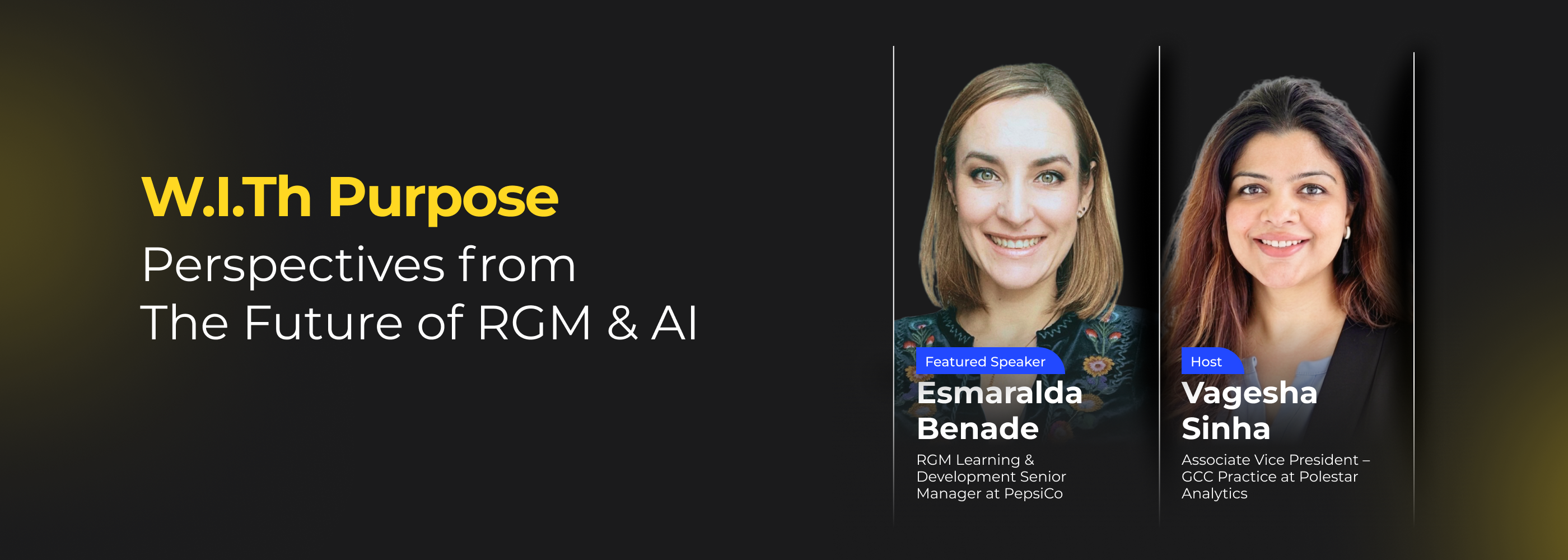
Melden Sie sich an, um die neuesten Einblicke und Updates zu Technologie, KI & Datenanalyse, Data Science und Innovationen von Polestar Analytics zu erhalten.
 Fassen Sie diesen Blogbeitrag wie folgt zusammen:
TL;DR
In dieser Ausgabe von WITh Purpose (Women in Tech with Purpose) – der Thought-Leadership-Reihe von Polestar Analytics, die führende Persönlichkeiten vorstellt, die Technologie und Wirtschaft prägen –Esmeralda Benade, Global RGM Capability Lead bei PepsiCo, schließt sich dem Gastgeber anVagesha SinhaDiskussionsthema: „Die Zukunft von RGM: KI, Fähigkeiten und kommerzielle Auswirkungen“. Dieser Artikel fasst die wichtigsten Erkenntnisse aus diesem Gespräch zusammen.
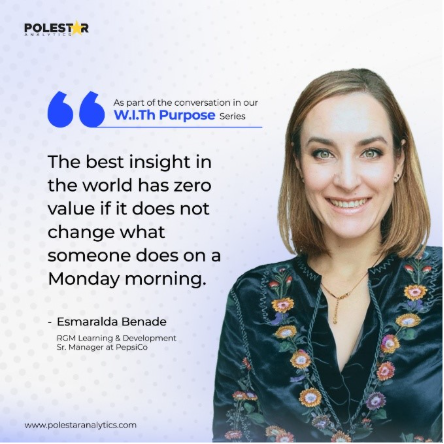
Dieser Gedanke vonEsmeralda Benade, Global Revenue Growth Management (RGM) Capability Lead bei PepsiCo, gab stillschweigend den Ton für die neueste Ausgabe vonMIT Sinn und Zweck – Frauen in der Technologie mit Sinn, Thought-Leadership-Reihe von Polestar AnalyticsDas Netzwerk bringt Frauen aus der gesamten Technologiebranche zusammen, um Geschichten, Erfahrungen und Perspektiven auszutauschen, die Branchen und Karrieren gleichermaßen prägen.
Dieses Mal war Esmeralda Benade als Moderatorin dabei.Vagesha Sinha, AVP GCC Practice bei Polestar Analytics, für ein Kamingespräch am„Die Zukunft von RGM: KI, Fähigkeiten und kommerzielle Auswirkungen.“
Und wenn man von diesem Eingangsgedanken ausgeht, ging es in dem Gespräch nicht nur um KI oder Analytik. Es ging darum, beides nutzbar zu machen.
Hier sind ein paar Erkenntnisse aus dem Gespräch, die Ihren Montagmorgen vielleicht verändern könnten.
Wie Esmeralda erklärt,UmsatzwachstumsmanagementEs geht darum, mithilfe von Daten zu verstehen, warum jemand in einem bestimmten Moment kauft, und sich ihm auf eine Weise zu präsentieren, die sich für ihn relevant anfühlt. Es lässt sich auf ein einfaches Prinzip reduzieren: „Das richtige Produkt zum richtigen Preis, mit der richtigen Werbung, am richtigen Ort, basierend auf dem Moment, in dem sich der Konsument befindet.“
Sie nannte ein alltägliches Beispiel: An einem heißen Sommernachmittag möchte man vielleicht ein gekühltes Getränk, das sofort verfügbar ist und dessen Preis diesem sofortigen Komfort entspricht.
Dieselbe Person, die für ein Familienessen einkauft, greift vielleicht stattdessen zu einer 2-Liter-Flasche im Sonderangebot.
Dieselbe Person. Anderer Moment. Völlig andere Entscheidung.
Das ist RGM in der Praxis: den Anlass des Kaufs verstehen und Preisgestaltung, Werbeaktionen, Verpackungsgestaltung und die Umsetzung im Geschäft auf diesen Moment abstimmen.
Möchten Sie genauer erfahren, wie RGM in den Bereichen Preisgestaltung, Werbeaktionen, Sortimentsgestaltung und Planung funktioniert? Entdecken Sie mehrDer Ansatz von Polestar Analytics zum UmsatzwachstumsmanagementDie
Durch ihre Tätigkeit in Europa, dem Nahen Osten und Südasien hat Esmeralda unterschiedliche Grade an digitaler Reife und Arbeitsweisen kennengelernt.
Doch trotz all dieser Veränderungen bleibt eine Variable konstant:Menschen.
„Menschen verändern sich nicht, weil man ihnen ein Modell vorsetzt; sie verändern sich, wenn ihnen etwas plötzlich einleuchtet.“
Denn selbst die besten Analysen setzen voraus, dass Teams sie verstehen, ihnen vertrauen und sie anwenden. Die wahre Herausforderung besteht darin, komplexe Analysen so verständlich zu machen, dass dieses Vertrauen entsteht.
Also,Wie sieht eine erstklassige RGM-Fähigkeit aus??
Werkzeuge, Handlungsanweisungen, Governance-Rahmenwerke und Schulungsprogramme sind allesamt unerlässlich. Doch deren Vorhandensein bedeutet nicht automatisch, dass man auch die nötigen Fähigkeiten besitzt.
Kompetenz zeigt sich, wenn ein Vertriebsleiter, der einem Kunden gegenübersitzt, instinktiv Kompromisse abwägt – nicht weil ihm ein Tool dies vorgibt, sondern weil diese Denkweise zur zweiten Natur geworden ist.
Wenn man den Hype um kommerzielle KI einmal beiseite lässt, wird eine klare Trennlinie deutlich zwischen den Bereichen, in denen die Technologie RGM tatsächlich transformiert, und den Bereichen, in denen ihre Auswirkungen überschätzt werden.
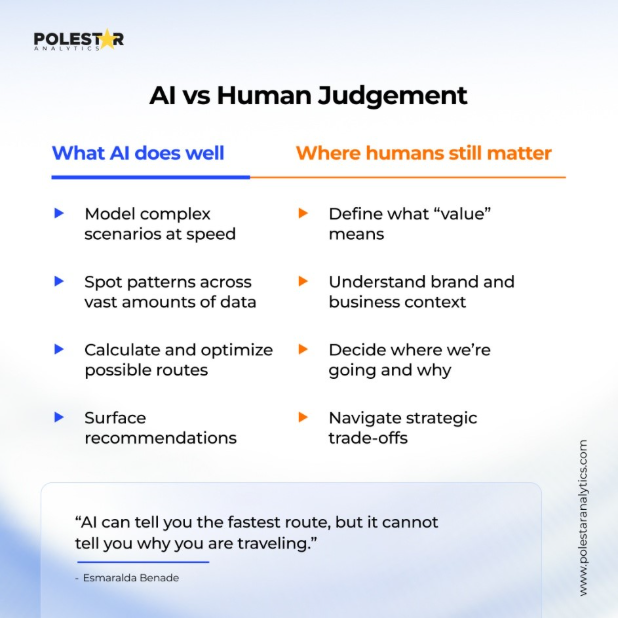
Künstliche Intelligenz ist unbestreitbar leistungsstark in Bezug auf Geschwindigkeit, Skalierbarkeit und Rechenleistung. Sie kann komplexe Szenarien modellieren, enorme Datenmengen verarbeiten und Muster aufdecken, die menschlichen Teams möglicherweise entgehen.
Strategische Absicht und menschlicher Zweck lassen sich jedoch nicht durch einen Algorithmus ersetzen.
Für alle, die neugierig sind, wo KI bereits Einzug in RGM hält, haben wir das Thema in unserem Artikel ausführlicher behandelt.Leitfaden für KI im UmsatzwachstumsmanagementDie
Die größte Herausforderung bei der digitalen Transformation von RGM über globale Regionen hinweg sind nicht die Technologie oder die Daten.
Es istGewohnheitDie
Dies geschieht häufig in folgender Form:"stiller Widerstand."Eine neue Arbeitsweise wird eingeführt, alle sind sich einig, dass sie sinnvoll ist, und dann finden die Leute still und leise wieder zu der altbekannten Tabellenkalkulation zurück, der sie vertrauen.
Warum?
Damit die neue Methode wirklich angenommen wird, muss sie sich sicherer anfühlen als die, die sie ersetzt. Vertrauen entsteht durch Menschen und Geschichten, nicht durch Plattformen.
Wissen ist nicht dasselbe wie Handeln
Um diese alten Gewohnheiten zu überwinden, muss man eine grundlegende Wahrheit erkennen:
„Wissen ist nicht gleich Verhalten.“
Die Programme zur Kompetenzentwicklung müssen sich stärker an alltäglichen Geschäftsentscheidungen orientieren und reale Geschäftsszenarien einbeziehen, den Teams Raum für sicheres Scheitern geben und ihnen ermöglichen, die direkten Konsequenzen von Kompromissen zu erfahren.
Die eigentliche Prüfung besteht nicht darin, was sich jemand aus einer Trainingseinheit merkt.
Es geht darum, ob sie am nächsten Tag in ein Meeting gehen und etwas anders denken.
Warum sieht eine Strategie, die auf Führungsebene absolut sinnvoll erscheint, bei ihrer Umsetzung manchmal völlig anders aus?
Diese Diskrepanz stellt dar"eine Brücke, die in der Mitte zerbrochen ist."
Eine Strategie mag zwar von der Unternehmensspitze in einer klaren Sprache formuliert sein, doch Vertrieb, Finanzen und Marketing hören und interpretieren sie jeweils durch die Brille ihrer eigenen funktionalen Prioritäten.
Um diese Lücke zu schließen, sind drei operative Schritte erforderlich:
Wenn alle an einem Strang ziehen, wird aus Strategie Verbindlichkeit.
Anfangs hatte sie oft das Gefühl, absolute Gewissheit zu benötigen, bevor sie in Führungssitzungen das Wort ergriff. Mit der Zeit veränderte die Beobachtung ihrer Kollegen ihre Denkweise – Führungskräfte gewinnen Selbstvertrauen durch Handeln, nicht durch Perfektion.
Eine andere Stimme im Raum zu haben, ist nichts, was es zu überwinden gilt – es ist eine Superkraft, die dringend benötigte Vielfalt an Gedanken mit sich bringt.
Ihr Rat?
„Warte nicht, bis du dich bereit fühlst, denn das wirst du wahrscheinlich nie sein. Sprich dich etwas früher aus, als es dir angenehm ist. Wage mehr, als du denkst, dass du solltest, und nutze das, was dich ausmacht.“
Möchtest du es direkt von Esmeralda hören? Sieh dir die komplette Session hier an.
Über den Autor
Datenerzähler
Die besten Ideen kommen nicht von allein. Sie warten darauf, dass man bereit ist.
Verwandter Blog
 Kaif
Kaif