
Sammanfatta detta blogginlägg med:
| AI inom RGM omformar värdet, men det är beroende av tillförlitlig data, inbäddade processer, tydliga skyddsräcken och skalbara kommersiella beslut. |
AI utvecklas snabbare än många verksamhetsmodeller för Revenue Growth Management kan hantera.
Det är den obekväma delen av den nuvarande diskussionen om RGM. De flesta företag använder redan dashboards, prissättningsmodeller, kampanjanalyser och testprojekt som är märkta som AI. Ändå fortsätter samma problem att dyka upp.88 %av organisationer rapporterade att de använde AI i minst en affärsfunktion år 2025. Men implementering är inte detsamma som mognad.
För RGM är den skillnaden viktig. AI-driven Revenue Growth Management kan stärka prissättning, kampanjer, handelsinvesteringar, paketarkitektur, portföljval och genomförande på kundnivå. Men värdet syns bara när team litar på inputen, arbetar inom tydliga skyddsräcken och agerar innan beslutsfönstret stängs.
I den här bloggen,hämta inspiration från insikterna frånvårt senaste RGM-rundabordssamtalmodererad avSaurabh Singh, affärschef – konsumentvaror/detaljhandel, Polestar AnalyticssammanfördaHarry Ergan, Corporate Vice President, Revenue Management at Ajinomoto; Colin McQuay, Senior Director och chef för Strategic Revenue Management på Nestlé USA; ochNuno Alexandre, Global RGM-chef, livsmedelsdivisionen på Unilever, Ta reda på vad RGM måste åtgärda innan AI kan skalas upp.
En transformerandeStrategi för hantering av intäktstillväxtbörjar inte med AI. Det börjar med kommersiell tydlighet.
Harry Ergans utgångspunkt var enkel: ”Många team ärver inte en mogen RGM-maskin. De bygger en. Det förändrar arbetet. Man kan inte automatisera en maskin som ännu inte har pålitliga delar.”
Innan ett företag kan skala upp rekommendationer, automatisera beslut eller agera snabbare behöver det en grund som folk litar på. Frågan är inte hur snabbt RGM kan bli mer sofistikerat. Frågan är vad som behöver finnas på plats innan den sofistikeringen blir användbar.
Instinkten att leda med ramverk är något som RGM-ledare måste motstå. Relevans är det som ger dig platsen vid bordet.
~ Saurabh
Därför bör ramverket nedan inte betraktas som en teoretisk modell. Det är en praktisk sekvens för att bygga förtroende innan AI, analys eller automatisering kan skalas upp.
Here is how Harry Ergan shared where The Four-Pillar RGM Scale Framework comes into the picture:
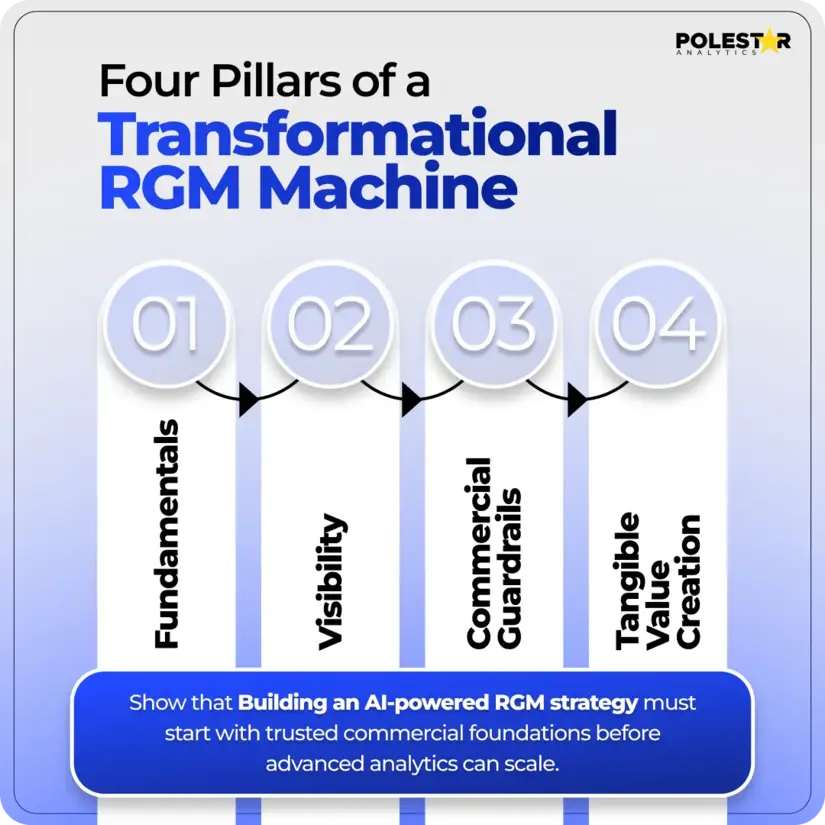
- Grundläggande: skapa en kommersiell baslinje
Före elasticitetsmodeller,AI-prisoptimeringeller marknadsföringsoptimering, behöver företaget ett svar på grundläggande frågor. Vad säljer vi? Till vem? Till vilket nettopris efter handelsinvestering? Med vilken faktisk lönsamhet?
I många företag finns dessa svar inom försäljning, ekonomi, marknadsföring och leveranskedjan. Försäljning ser volym. Ekonomi ser marginal. Marknadsföring ser varumärkeskapital.Hantering av intäktstillväxtmåste ansluta hela det kommersiella systemet.
- Synlighet: exponera besluten bakom prestationen
ROI-mätare för kampanjer, marginalvattenfall och prissättningsdashboards spelar bara roll när de avslöjar beslut som behöver ändras. Var ger företaget överraskningar? Vilka kampanjer är verkligt stegvisa? Var behandlas olika kunder lika trots olika ekonomiska fördelar?
- Kommersiella skyddsräcken: ge team strukturerad frihet
Det är här RGM måste undvika att bli prissättningspolis. Rollen är inte att bromsa verksamheten. Den är att ge teamen tillräckligt med struktur för att de ska kunna röra sig snabbare utan att fatta inkonsekventa beslut.
Prissättningskorridorer, kundnivåer, paketprisarkitektur och regler för handelsinvesteringar hjälper team att veta var de ska flexa, var de ska vänta och när de ska eskalera. Bra skyddsräcken skyddar marginalen utan att undanröja kommersiella omdömen.
- Konkret värdeskapande: bevisa RGM genom beslut
RGM får trovärdighet när företaget kan peka på ett eller två beslut som det annars inte skulle ha fattat. En kampanj som såg stark ut på volym men förstörde marginalen. En prisrörelse som skyddade vinsten utan att skada aktien. En förändring av paketarkitekturen som förbättrade mixen. Poängen är inte att visa att modellen är sofistikerad. Poängen är att visa att RGM hjälpte företaget att fatta ett beslut som det annars inte skulle ha fattat.
Poängen är enkel. RGM-maskinen måste vara pålitlig innan den kan automatiseras. Det är också den bredare rollen för uppkoppladeLösningar för hantering av intäktstillväxtinte ytterligare ett rapporteringslager, utan ett tydligare sätt att koppla samman prissättning, marknadsföring och lönsamhetsbeslut.
Se hur uppkopplad RGM fungerar i praktiken.
Testa scenarier med olika leverantörsmöjligheter för pris, förpackning, kampanj, mix och kanal inom en och samma plattform för intäktsinformation.
Utforska ProfitPulse
Tillit till siffrorna är bara det första steget. Det svårare testet är om RGM-tänkandet syns i vardagliga kommersiella beslut.
Det är här Colin McQuays poäng om ”människor och processer” är viktig. Problemet är inte att tekniken inte spelar någon roll. Det är att stark analys fortfarande kan stå oanvänd när team saknar kontext, ifrågasätter rekommendationen eller får insikten efter att beslutet redan har fattats.
Det är därförHantering av företagsintäkter och tillväxtkan inte vara beroende av ett litet expertteam som producerar analyser åt alla andra. Det måste bli en del av hur kommersiella team planerar, utmanar och agerar.
Tre adoptionsskiften utmärkte sig.
- Datademokratisering
Datademokratisering handlar inte om att ge varje team en ny rapport. Det handlar om attAnalys av intäktstillväxthanteringanvändbara där beslut fattas.
Kontoteamet som planerar en kampanj bör förstå avvägningen. Prissättningsteamet bör se skyddsräcken innan kundsamtal. Marknadsföringsteamet bör veta hur portföljval påverkar paketroller och mix. Ekonomiteamet bör se kopplingen till marginal och värdeskapande.
- RGM inbäddat i arbetsflödet
Colins förändring av verksamhetsmodellen var tydlig: RGM måste gå från ”gör det åt mig” till ”Jag har planerat det här, kan du titta på det?”
Det är i det ögonblicket som RGM slutar vara en servicedesk och börjar bli en kommersiell kapacitet. Funktionen behövs fortfarande. Men dess värde skiftar från att göra varje analys till att höja kvaliteten på besluten i hela organisationen.
- Integrerad kommersiell kapacitet
Nuno Alexandre drev detta vidare. Tillväxtplanen och RGM-planen kan inte vara separata. De måste bli synonyma.
När de förblir separata skapar verksamheten två kalendrar, två uppsättningar antaganden och två versioner av ansvarsskyldighet. När de kombineras blir RGM en del av hur verksamheten definierar tillväxt, inte bara hur den granskar prestationer.
Det är också härRGM-programofta kämpar. Central analys kan vara stark, men värde går förlorat när insikter inte är kopplade till lokal marknadskontext, ägarskap och handling.
Se det sammankopplade lagret i aktion.
Det tydligaste sättet att förstå hur det sammankopplade beslutslagret fungerar är att titta på det. Se hurProfitPulsekör scenarier som täcker flera leverage över prissättning, marknadsföring, mix, förpackning och lönsamhet inom en enda driftsmiljö.
Utforska ProfitPulse
AI i RGM är inte ett enda användningsfall. Det är en uppsättning praktiska interventioner som minskar avståndet mellan insikt och beslut.
Rundabordssamtalen behandlade inte AI som en ersättning för kommersiellt omdöme. Den mer användbara synvinkeln var snävare och starkare: AI borde göra det lättare att ifrågasätta, testa och agera utifrån komplexa RGM-beslut.
Användningsfall 1: Avmystifiering av den svarta lådan
Generativ AI kan hjälpa användare att "chatta" med sin data. Istället för att få en rekommendation utan kontext kan en sälj- eller kommersiell användare fråga hur rekommendationen byggdes upp, varför den fungerade och vilka antaganden som ligger bakom den.
Det är viktigt eftersom förtroende alltid har varit ett av de största hindren iAnalys av intäktstillväxthanteringOm användarna kan ifrågasätta rekommendationen och förstå logiken är det mer sannolikt att de agerar utifrån den.
Användningsfall 2: Snabb scenarioplanering
Det är inom scenarioplanering som AI för prissättningsstrategi blir omedelbart relevant.
Harry refererade till möjligheten att köra prissättningsscenarier över 60 SKU:er på 15 marknader över en natt. Den typen av hastighet förändrar rytmen i kommersiellt beslutsfattande. Team kan jämföra intäkter, volym, marginal och mixpåverkan innan de går in i kundförhandlingar, inte efteråt.
Användningsfall 3: Hastighet till insikt
Nunos poäng om snabbhet och smidighet är viktig här. Prismix, diagnostik av kampanjer och analyser efter evenemang förlorar ofta värde eftersom de kommer för sent.
Detta är ett av de tydligaste sättenAI förändrar hanteringen av intäktstillväxtKommersiella team behöver inte alltid mer teori. Team behöver en tydlig bild av vad som förändrades, vad som orsakade det och hur man justerar innan nästa cykel startar.
Användningsfall 4: Agenternas framtid
Agentisk AI är det ambitiösa användningsfallet. Autonoma agenter kan flagga underlevererade kampanjer, identifiera svaga signaler och föreslå justeringar innan cykeln avslutas.
Harry såg detta som nära förestående. Nunos varning var lika viktig: dålig data blir inte strategisk bara för att AI ligger ovanpå den.
Den försiktigheten har nu bredare marknadsstöd. Gartner förutspår att mer än40 %av agentisk AI-projekt kommer att ställas in i slutet av 2027 på grund av eskalerande kostnader, oklart affärsvärde eller otillräcklig riskkontroll. För RGM är lärdomen direkt: agentisk AI kan inte stå före den operativa modell den är avsedd att förbättra.
Expertinsikt: Varför människor och processer fortfarande bestämmer RGM-skalan
- Talangens svänghjul:Harrys poäng handlade inte om att anställa enbart för analys. Bättre RGM-arbete attraherar bättre RGM-talanger. När funktionen påverkar prissättningsstrategi, portföljplaner, kundförhandlingar och årlig planering, bygger det upp starkare kommersiell kapacitet.
- Förberedelser innan besluten är slutgiltiga:RGM måste komma in innan beslutet fattas, inte efter att det har validerats. Att gå uppåt mot planering, prissättningsstrategi, innovation, kommersialisering och kundinvesteringar förändrar beslutets kvalitet.
- Enhörningens profil:Nuno beskrev den ovanliga blandningen av RGM väl: strategisk syn, kommersiell instinkt, analytiskt djup, inflytande och modet att utmana konstruktivt. Den kombinationen handlar inte om personlig utveckling. Det handlar om RGM-tillväxt.
|
DeFramtiden för intäktstillväxthanteringär inte ett hopp från dashboards till autonomBästa praxis för hantering av intäktstillväxtåtergå fortfarande till kapacitet, inte bara personalstyrka. Agenter. Det låter lockande, men det hoppar över den hårda mitten. Rundabordssamtalen gjorde utvecklingen tydligare: först synlighet, sedan inflytande, sedan skalning. AI kan accelerera varje steg, men det kan inte ersätta det arbete som krävs för att uppnå trovärdighet.
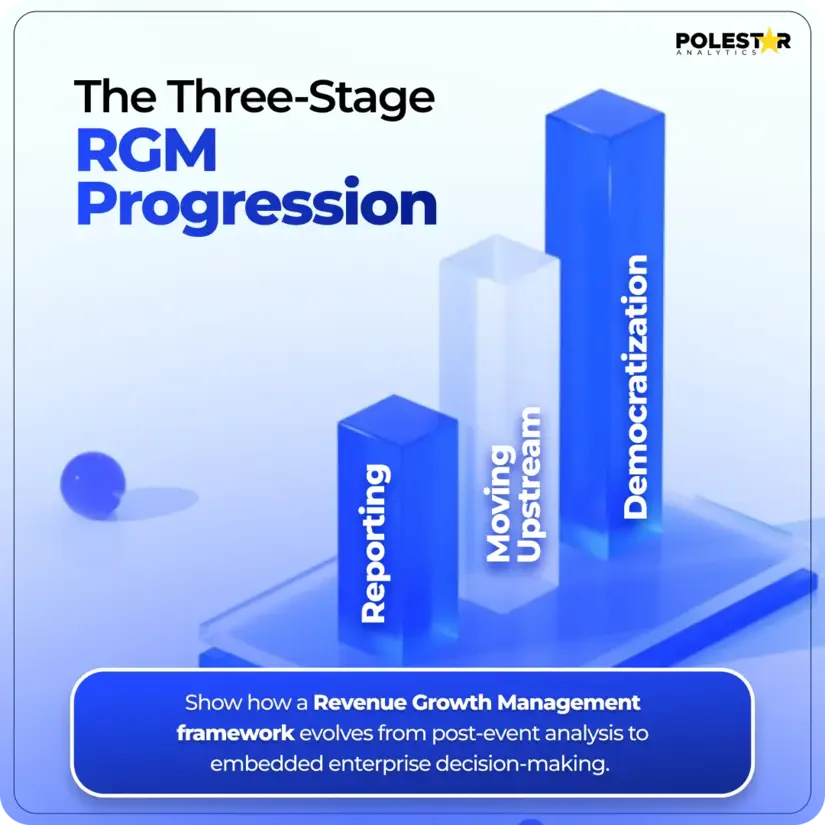
Steg ett: Rapportering
Det är här de flesta RGM-funktioner börjar. De förklarar vad som hände: prissättningsresultat, kampanjprestanda och marginalanalys. Finansavdelningen anammar ofta detta först eftersom det skapar synlighet. Men funktionen ligger fortfarande efter beslutet.
Steg två: Rör sig uppströms
Det är här verklig förändring börjar. RGM börjar forma nästa kvartal istället för att förklara det förra. Det hjälper till att bygga kampanjkalendern snarare än att granska den senare. Det sätter kommersiella skyddsräcken inför kundförhandlingar. Det blir en del av årlig planering, innovation, prissättningsarkitektur, portföljbeslut och kundinvesteringar.
Steg tre: Demokratisering
När RGM väl fått trovärdighet kan det skalas ut i hela organisationen. RGM-tänkandet integreras i försäljning, ekonomi, marknadsföring och verksamhet. Det centrala RGM-teamet försvinner inte. Det blir mer fokuserat på styrning, kapacitet, beslutskvalitet och de få val som formar tillväxtbanan.
Det är RGM-mandatet i AI:s tidsålder. Bygg baslinjen. Bygg förtroende. Bygg skyddsräcken. Bädda in funktionen i planeringen. Skala sedan AI.
Det är härPolestar Analytics AI Pulse Suitekopplar tillbaka till RGM-agendan på ett praktiskt sätt. PricePulse, PromoPulse och ProfitPulse hjälper till att föra prisanalys, kampanjdiagnostik, portföljinformation och marginalsynlighet närmare det kommersiella beslutsflödet. Rollen är inte att ersätta RGM-bedömning. Den är att göra det lättare att tillämpa pålitligt RGM-tänkande i alla team.
AI kommer att förändra RGM. Men bara när RGM är tillräckligt starkt för att absorbera det. Det är den verkliga riktningen bakom trenderna inom Revenue Growth Management 2026.
Bonusspår – Rapid Fire med RGM-experterna
AI för prissättningsstrategi hjälper team att testa prisrörelser innan de når marknaden. Med Polestar Analyticsprisanalyslösning, team kan jämföra marginalpåverkan, volymförändringar, avvikelser på kundnivå och avvägningar mellan förpackningspriser innan prisbeslut låses.
AI optimerar kampanjer genom att visa vilka erbjudanden som skapar verklig ökning och vilka som bara ökar volymen till en högre kostnad. Polestar Analyticslösning för kampanjanalyshjälper team att läsa av ROI, inkrementalitet, rabattdjup, varaktighet och kundrespons tidigare, så att kampanjplaneringen rör sig närmare kurskorrigering än granskning efter evenemanget.
Agentic AI flyttar RGM från analys på begäran till ständigt pågående kommersiell avkänning. Som Harry noterade kan agenter flagga underlevererande kampanjer, testa prissättningsscenarier över olika marknader och rekommendera justeringar innan cykeln avslutas. Men som Nuno varnade för blir dålig data bara "dåligt sofistikerad" med AI i toppen. Den verkliga förändringen i analys av intäktstillväxthantering är styrt, proaktivt beslutsstöd, inte blind automatisering.
RGM-team bör använda AI för scenariotestning, diagnostik, varningar och rekommendationsstöd, samtidigt som slutgiltigt godkännande, undantag och marknadsbedömningar behålls av ansvariga företagare.ProfitPulsestärker denna balans genom att blanda prissättning, kampanj, portfölj och marginalsignaler i ett beslutslager, så att automatiseringen förbättras.analys av intäktstillväxthanteringutan att ersätta kommersiellt ägande.