
Vat dit blogbericht samen met:
Bekijk de beste platforms voor werkkapitaalplanning voor CFO's en vergelijk hun sterke punten op het gebied van prognoses, liquiditeit en uitvoering.
PwC's onderzoek naar werkkapitaal 2025/26Het rapport identificeert €1,84 biljoen aan overtollig werkkapitaal dat beschikbaar is voor investeringen. De analyse omvat meer dan 17.000 beursgenoteerde bedrijven.
De omvang van de mogelijkheden is duidelijk. De softwarekeuze is minder vanzelfsprekend.
Een platform voor debiteurenbeheer, een treasury-systeem, een netwerk voor vervroegde betalingen, een FP&A-applicatie en een intelligentielaag voor werkkapitaalbeheer verbeteren allemaal de cashflow. Ze grijpen op verschillende punten in.
| Platform |
Beste pasvorm |
Kernkracht |
Belangrijkste beperking |
| CapitalPulse van Polestar Analytics |
Bedrijfsbrede verbetering van het werkkapitaal |
Oorzaakdiagnose, scenariovalidatie en actiebewaking met integratie van conceptplannen met één klik in Anaplan. |
Vereist duidelijke definities van gegevens en eigendomsrechten. |
| HogeRadius |
bedrijven met een grote debiteurenportefeuille |
Kredietverlening, incasso, inhoudingen en kasverwerking |
Voorraadplanning valt buiten het sterkste toepassingsgebied. |
| Kyriba |
Liquiditeitsbeheer onder leiding van het ministerie van Financiën |
Inzicht in kasstromen, betalingen, financiering en risicobeheer. |
Operationele planning vereist nog een extra laag. |
| C2FO |
Programma's voor vroegtijdige betaling door leveranciers |
Dynamische kortingen en leveranciersliquiditeit |
Smaller dan een volledig planningsplatform |
| Prophix Een |
FP&A-gestuurde kasplanning |
Prognoses voor de komende 13 weken en kasstroomscenario's |
Voert geen debiteuren-, crediteuren-, bank- of treasurytransacties uit. |
*De mogelijkheden overlappen elkaar in deze categorieën. De tabel geeft de primaire rol van elk platform in deze vergelijking weer.
De meeste platformen kunnen een afwijking in het werkkapitaal aan het licht brengen. Veel minder platformen kunnen echter de oorzaak ervan verklaren, de afwegingen in prijs bepalen en garanderen dat de gekozen actie daadwerkelijk liquiditeit vrijmaakt.
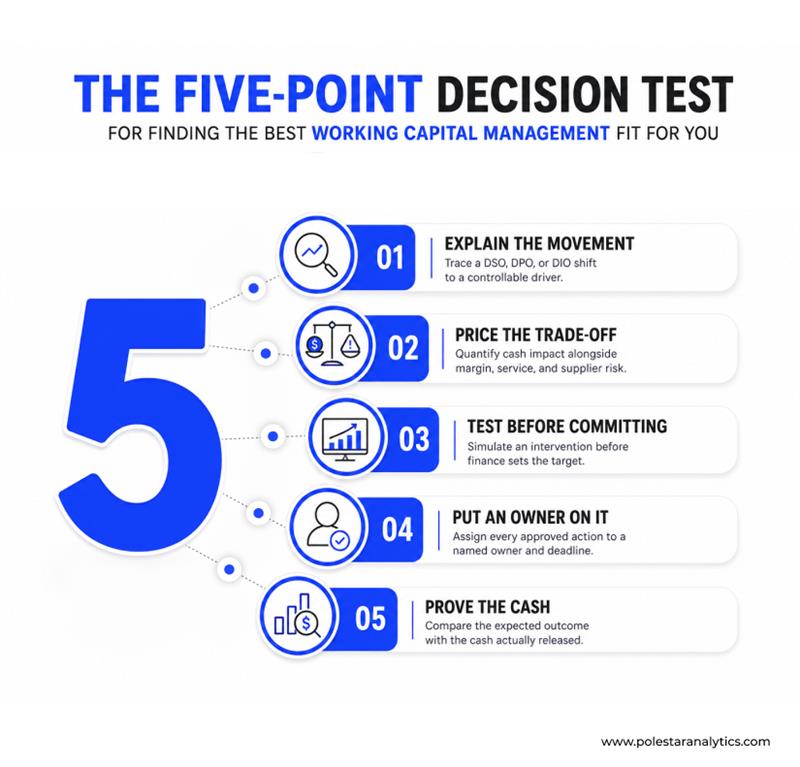
Bij deze test blijkt geen enkel platform in alle scenario's voor werkkapitaalbeheer uit te blinken.De beste platforms voor werkkapitaalplanning voor CFO'sZe onderscheiden zich door de aspecten waarin ze de meeste beslissingswaarde creëren.

Het meest geschikt voor cross-functionele inzichten in werkkapitaalbeheer.
CapitalPulse Het is ontwikkeld voor bedrijven waar werkkapitaalanalyses veel data opleveren, maar weinig duidelijkheid bieden bij het nemen van beslissingen.
Financiën, treasury, inkoop, supply chain en operations beoordelen hetzelfde liquiditeitsprobleem vaak vanuit verschillende invalshoeken. Het resultaat is voorspelbaar: tegenstrijdige verklaringen, brede doelstellingen en geen duidelijke verantwoordelijke voor de actie.
CapitalPulse pakt die lacune aan door middel van een gereguleerde workflow:
Detecteren → Diagnostiseren → Simuleren → Valideren → Uitvoeren
De volgorde is belangrijk, omdat een KPI-beweging zich zelden vanzelf verklaart. Wanneer de voorraadomloopsnelheid (Days Inventory Outstanding) stijgt, komt dat meestal doordat mensen weinig kopen, we te veel hebben ingekocht, we te veel overtollige voorraad hebben of er problemen zijn met de productie van onze producten. Als de verkoopomloopsnelheid (Days Sales Outstanding) verslechtert, kan dat betekenen dat we conflicten hebben met onze klanten, dat we traag zijn met het versturen van facturen, dat mensen ons niet terugbetalen of dat we onze betalingen niet goed innen. Elk van deze problemen, met betrekking tot de voorraadomloopsnelheid en de verkoopomloopsnelheid, vereist een andere aanpak.
Belangrijkste mogelijkheden:
- AI-gestuurde anomaliedetectie voor AR, AP, voorraadbeheer en liquiditeit.
- Oorzaakdiagnose van werkkapitaalbewegingen
- Scenariomodellering met validatie van de financiële impact
- Aanbevelingen met prioriteit op basis van financiële impact en zakelijke inspanning
- Actiebewaking met duidelijke verantwoordelijkheid en governance.
- Geïntegreerd inzicht in debiteuren, crediteuren, voorraad en de algehele cashconversieprestaties.
- Anaplan Bridge, waarmee CapitalPulse-inzichten worden geïntegreerd in bestaande Anaplan-modellen en planningsworkflows.
CapitalPulse aanvullingenAnaplan in plaats van het te vervangen.Anaplan Het biedt een geïntegreerde planningsomgeving voor het modelleren van inkomsten, uitgaven, voorraad, werkkapitaal, balans en kasstroom, terwijl CapitalPulse daar diagnose, scenariovalidatie, aanbevelingsprioriteit en actietracking aan toevoegt.
Het bewijsmateriaal biedt nuttige context.In de casestudy van Polestar Analytics over de transformatie van het werkkapitaal met behulp van AI, kreeg een koekjesfabrikant met een omzet van 800 miljoen dollar te maken met leveranciersbetalingstermijnen van 20 tot 30 dagen en klantenbetalingstermijnen van 60 tot 90 dagen.
Voel de polsslag van uw werkkapitaal.
CapitalPulse koppelt debiteurenbeheer, crediteurenbeheer, voorraadbeheer en Anaplan-planning aan elkaar om vastzittend geld op te sporen, de juiste acties te valideren en bij te houden wat er daadwerkelijk wordt vrijgegeven.
Bekijk CapitalPulse in actie.
Het meest geschikt voor order-to-cash-uitvoering.
HighRadius is geschikt voor bedrijven waar debiteuren de oorzaak zijn van het werkkapitaalprobleem.
Grote debiteurenteams worstelen zelden met de DSO-formule. Zij worstelen met duizenden facturen, inhoudingen, geschillen, betalingen, kredietbeslissingen en incassowachtrijen.
HighRadius Integrated Receivables combineert kredietbeheer, facturering, incasso, betalingen, kasverwerking, inhoudingen en debiteurenanalyse in één uniforme workflow.
De voorspellende prioritering helpt incassoteams zich te concentreren op accounts met een hoog risico. Geautomatiseerde verwerking van betalingen en het matchen ervan verminderen de handmatige verwerking van bedragen. Gedeelde context voor incasso's en inhoudingen voorkomt bovendien dat teams achter betwiste facturen aan moeten gaan.
Deze operationele diepgang is van belang in omgevingen met veel facturering.
De grenzen ervan zijn eveneens duidelijk. HighRadius is het sterkst binnen het order-to-cash-proces. Het is niet de eerste keuze voor voorraadbeheer, productieplanning, vraagprognoses of bedrijfsbrede cashflowscenario's.
Het meest geschikt voor schatkistbeheer, liquiditeit en financiering.
Kyriba benadert het werkkapitaal vanuit een treasury-gestuurd perspectief.
Het platform brengt inzicht in kasstromen, liquiditeitsprognoses, betalingen, financiële risico's, leveranciersfinanciering, dynamische kortingen en debiteurenfinanciering samen in één omgeving.
Het platform is geschikt voor multinationale organisaties met meerdere banken, entiteiten, valuta's en financieringsposities.Het werkkapitaal van KyribaHet bedrijf ondersteunt ook programma's voor crediteuren- en debiteurenbeheer, naast zijn treasury-capaciteiten.
Kyriba helpt de schatkamer inzicht te krijgen in waar het geld zich bevindt, hoe de financiering verloopt en welk financieringsprogramma de liquiditeitsdoelen ondersteunt.
Echter,Inzicht in liquiditeit is niet hetzelfde als operationele controle.
Kyriba beschikt niet over veronderstellingen over de vraag, voorraadbuffers, productieplannen, klantonderhandelingen of assortimentsbeslissingen. Die factoren vereisen een gekoppelde plannings- of werkkapitaalbeheerlaag.
Ideaal voor leveranciersliquiditeit en dynamische kortingen.
C2FO benadert het werkkapitaal via de liquiditeit van leveranciers in plaats van via traditionele financiële planning.
Het platform stelt leveranciers in staat om vervroegde betaling te verkrijgen door middel van een dynamische korting. Hierdoor kunnen kopers hun beschikbare liquide middelen optimaal benutten, terwijl leveranciers sneller toegang krijgen tot hun geld. Dit biedt beide partijen flexibiliteit, zonder volledig afhankelijk te zijn van vaste betalingsvoorwaarden.
Naast vervroegde betalingen faciliteert C2FO initiatieven voor leveranciersfinanciering, dynamische kortingsmethoden en optimalisatie van betalingsvoorwaarden, waardoor organisaties hun liquiditeit in de gehele toeleveringsketen kunnen verbeteren.
Voor CFO's is C2FO met name relevant wanneer het werkkapitaal van leveranciers een belangrijke rol speelt in de algehele cashstrategie in plaats van een op zichzelf staande inkoopactiviteit te zijn.
De mogelijkheden ervan vormen een aanvulling op bredereSoftware voor werkkapitaalbeheerdoor een van de belangrijkste hefbomen in de cashconversiecyclus aan te pakken: de betalingen aan leveranciers.
Het meest geschikt voor kasstroomprognoses over 13 weken en FP&A.
Prophix One combineert financiële planning met inzicht in de kasstroom op korte termijn.
Zijnmogelijkheden voor cashflowplanningDit omvat prognoses voor 13 weken, overzichten van de kaspositie van verschillende entiteiten, analyse van de klantconcentratie, identificatie van achterstallige facturen en scenariomodellering.
Prophix biedt ook ondersteuning voor betalingstermijnen en debiteurenscenario's op factuurniveau. Dit geeft de financiële afdeling een gedetailleerder beeld van de kasstroom op korte termijn dan een geaggregeerde maandelijkse prognose.
Prophix behoort tot deBeste FP&A-software voor CFO'sEen discussie over de plaats van kasstroomprognoses binnen een bredere financiële planningscontext.
De productgrenzen zijn duidelijk. Prophix importeert debiteuren- en crediteureninformatie voor analyse. Het verzorgt geen facturering, incasso, betalingen, bankrekeningen of treasury-uitvoering.
Zelden heeft één platform de volledige geldcyclus in handen.
| Laag |
Rol |
Typisch platform |
| Transactielaag |
Registreert facturen, bestellingen, voorraad en betalingen. |
ERP- en operationele systemen |
| Planningslaag |
Financiële en operationele aannames van het model |
Anaplan of Prophix One |
| Uitvoeringslaag |
Beheert incasso-, betalings-, treasury- of leveranciersprogramma's. |
HighRadius, Kyriba of C2FO |
| Beslissingsintelligentielaag |
Stelt diagnoses van de oorzaken, valideert acties en volgt de gerealiseerde kasstromen. |
CapitalPulse |
Deze structuur voorkomt een veelvoorkomende inkoopfout.
Veel kopers verwachten dat één platform fungeert als centraal registratiesysteem, planningsmodel, financieel beheersysteem, workflow-engine en intelligentielaag. Het resultaat is een grootschalige implementatie met een geringe acceptatie.
Software repareert geen zwak besturingssysteem.
Sterke werkkapitaalprogramma's zijn nog steeds afhankelijk van gedisciplineerde operationele keuzes:
- Segmenteer incasso's op basis van betalingsgedrag, type geschil, klantwaarde en risico.
- Stel leveranciersvoorwaarden vast op basis van de kritische aard en veerkracht van de categorie.
- Controleer de voorraad op basis van artikelnummer (SKU), locatie, serviceniveau, marge en veroudering.
- Koppel de kasstroomprognose voor de komende 13 weken aan het maandelijkse financiële plan.
- Wijs aan elke financiële transactie een verantwoordelijke, deadline, verwachte waarde en gerealiseerd resultaat toe.
- Houd bij hoeveel geld er is uitgegeven in plaats van het aantal gegenereerde aanbevelingen te tellen.
Deze praktijken draaienWerkkapitaaloplossingen voor bedrijvenin een herhaalbaar werkproces.
Zonder hen produceert de software betere rapporten, terwijl dezelfde beslissingen onopgelost blijven.
Een tekort aan werkkapitaal ontstaat meestal door zakelijke beslissingen die worden genomen voordat het financiële team de impact van deze beslissingen op het bedrijf kan inschatten.
Prijzen, promoties, handelsvoorwaarden, vraagvoorspellingen en assortimentsplanning zijn allemaal factoren die van invloed zijn op de liquide middelen van een bedrijf. Ze bepalen hoe snel het bedrijf zijn producten verkoopt, hoeveel winst het per verkoop maakt en wanneer het bedrijf door zijn klanten wordt betaald.
Een promotie kan er bijvoorbeeld voor zorgen dat een bedrijf op korte termijn meer van een product verkoopt, maar het kan er ook toe leiden dat het bedrijf te veel voorraad heeft van andere producten die minder goed verkopen.
Strengere voorwaarden voor detailhandelaren kunnen helpen om de volumes te verhogen, maar tegelijkertijd de betalingstermijn verlengen.
Dit is waar omzetgroeimanagement (Revenue Growth Management, RGM) en werkkapitaalplanning elkaar beginnen te overlappen. RGM beoordeelt het commerciële effect van prijs-, promotie-, handelsuitgaven- en assortimentsbeslissingen. Werkkapitaalmanagement kijkt naar wat diezelfde beslissingen doen met voorraad, debiteuren, liquiditeit en de cashconversiecyclus.
Voor CFO's is het doel niet om beide disciplines samen te voegen. Het is de bedoeling ervoor te zorgen dat commerciële beslissingen, vóór goedkeuring, worden getoetst op groei, marge en impact op de kasstroom.
CapitalPulse ondersteunt die verbinding door commerciële, voorraad-, debiteuren- en financiële signalen in het besluitvormingsproces rond werkkapitaal te integreren.
De sterksteFinancieel managementtools voor CFO'smoet een realistische businesscase doorstaan.
Geef elke geselecteerde leverancier dezelfde taak:
- Laad één materiaal-DSO-, DPO- of DIO-variantie in.
- Herleid het tot de klant, leverancier, SKU, locatie of bedrijfseenheid.
- Model twee interventies.
- Vergelijk de effecten van contanten, marges, dienstverlening en risico.
- Stuur de geselecteerde actie door naar een eigenaar.
- Laat zien hoe de gerealiseerde waarde na 30, 60 en 90 dagen zal worden gemeten.
Een verzorgd dashboard bewijst de kwaliteit van de presentatie. Deze test bewijst de beslissingswaarde.
Er is geen eenduidige winnaar die in alle gevallen van werkkapitaalgebruik de beste keuze is.
CapitalPulse Biedt de breedste, cross-functionele diagnose- en actielaag. HighRadius is verantwoordelijk voor operationele debiteuren. Kyriba is verantwoordelijk voor treasury en liquiditeit. C2FO ondersteunt programma's voor vervroegde betalingen aan leveranciers. Prophix One versterkt de kasstroomprognoses en FP&A.
Debeste oplossingen voor werkkapitaalbeheeraansluiten bij de beslissing, de gegevens, het operationele model en de bestaande technologie.
Begin met de geldbeperking. Identificeer vervolgens de ontbrekende laag.
Voor Anaplan-gebruikers verbindt Polestar Analytics bedrijfsplanning met CapitalPulse-inzichten over werkkapitaal. Dit creëert een gestroomlijnd traject van operationele signalen naar gevalideerde financiële acties.
Begin met de liquiditeitsbeperking, niet met de softwarecategorie. Stel vast of het hoofdprobleem ligt bij debiteurenbeheer, voorraadbeheer, leveranciersbetalingen, inzicht in liquiditeit of besluitvorming tussen verschillende afdelingen. Beoordeel vervolgens of het platform de onderliggende oorzaken kan diagnosticeren, afwegingen kan modelleren, acties kan toewijzen, kan integreren met bestaande systemen en de daadwerkelijk vrijgekomen liquide middelen kan volgen.
Software voor werkkapitaalbeheer moet de oorzaak, de afweging, de actie, de verantwoordelijke en het verwachte kasresultaat achter elke afwijking toelichten. KPI-rapportage vormt de basis. Sterke platforms bieden bovendien scenario-testen, traceerbare workflows, systeemintegratie en het bijhouden van gerealiseerde waarde.
CapitalPulse is een agentgestuurd platform voor werkkapitaalbeheer dat zich richt op debiteuren, crediteuren, voorraden en liquiditeit. Het detecteert kasrisico's, diagnosticeert de onderliggende oorzaken, test interventies, valideert de financiële impact en volgt de uitvoering. Het functioneert bovenop bestaande ERP-, treasury- en planningssystemen.
CapitalPulse voegt diagnose en actie-inzichten voor werkkapitaal toe aan het gekoppelde planningsmodel van Anaplan. CapitalPulse analyseert signalen met betrekking tot debiteuren, crediteuren, voorraad en liquiditeit. Anaplan modelleert het effect hiervan op operationele en financiële plannen. Samen verbinden ze de grondoorzaak, scenariovalidatie, goedkeuring en uitvoering.
Voorraadgerichte oplossingen voor werkkapitaalbeheer moeten DIO koppelen aan vraag, inkoop, productie, serviceniveaus, marge en veroudering. CapitalPulse biedt een cross-functionele diagnose en actietracking. Anaplan biedt de samenhangende context voor vraag, aanbod en financiële planning.