 Nitin KumarData-verteller
Meld u aan om de nieuwste inzichten en updates over technologie, AI & data-analyse, datawetenschap en innovaties van Polestar Analytics te ontvangen.
 Vat dit blogbericht samen met:
Kort samengevat:AI-pilots in het bedrijfsleven falen zelden door slechte algoritmes. Ze falen door duizend kleine fricties die niemand op tijd heeft opgemerkt. Forward deployed engineering helpt deze kloof te dichten door engineers midden in het werk te plaatsen, in plaats van achteraan in een wachtrij. Dit artikel legt uit wat deployed engineering is en waarom.AI-implementatie binnen bedrijvenZonder dat mislukt het vaak, en het laat zien wat er echt voor nodig is om het goed te doen.
Na een mislukte AI-pilot valt er een bijzondere stilte. Geen dramatische stilte, geen alarmen, geen analyses achteraf. Gewoon een tool die stilletjes niet meer wordt geopend. Een dashboard dat niemand meer bekijkt. Een model dat technisch gezien nog steeds draait en voorspellingen produceert die nergens heen leiden.
Stel je een documentclassificatiemodel voor. Vierennegentig procent nauwkeurigheid bij het testen. Iedereen is tevreden. Iemand schrijft een mooie update voor de directie.
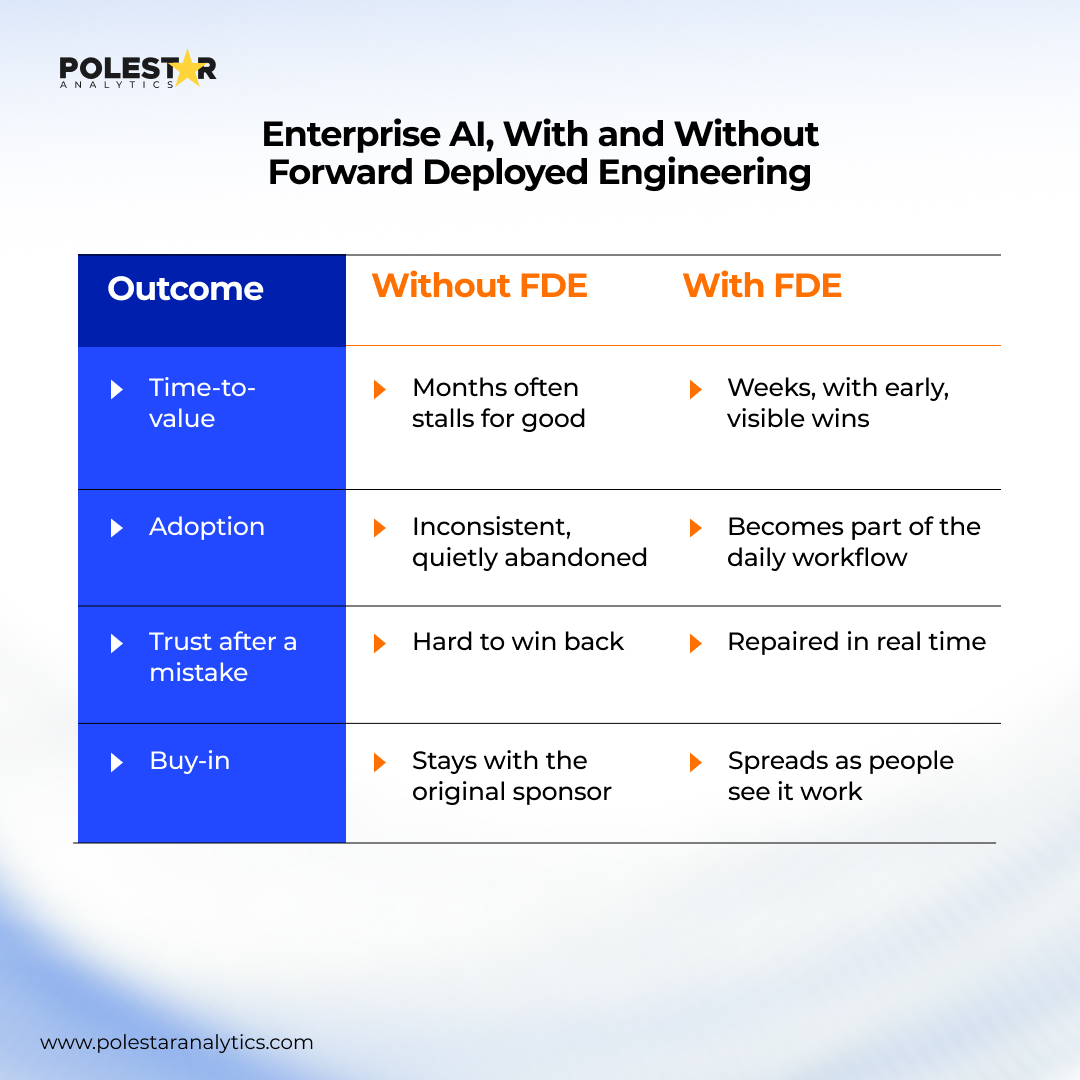
Zes weken na de lancering is het financiële team er stilletjes mee gestopt.
Er ging eigenlijk niets kapot. Het model stuitte op een factuurformaat waar niemand het op had getraind, maakte een zelfverzekerde, maar foute inschatting, en iemand moest een dag werk handmatig overdoen. Niemand diende een bugrapport in. Ze gingen gewoon weer aan de slag met hun spreadsheets.
Dit is geen op zichzelf staand verhaal.Uit het NANDA-project van MIT bleek dat 95%Pilotprojecten met generatieve AI binnen grote organisaties leveren geen meetbaar resultaat op, niet omdat de modellen zwak waren, maar omdat de workflows eromheen kwetsbaar waren en niet aansloten op de manier waarop er gewerkt wordt. Dat patroon ligt ten grondslag aan de stilte van het financiële team, en is terug te vinden in een hele branche.
Het data science-team levert het model. De IT-afdeling levert de infrastructuur. Niemand is verantwoordelijk voor de zes weken na de lancering, wanneer het model een wereld tegenkomt waarvoor het niet helemaal getraind is. Dat is geen technisch probleem, maar een gebrek aan verantwoordelijkheid, en de traditionele leveringsmethoden zijn structureel zo ingericht dat ze dit probleem niet aanpakken: tickets, sprints en overdrachten gaan er allemaal van uit dat degene die het model heeft gebouwd niet degene is die moet toezien hoe het mislukt.
Als je de details even buiten beschouwing laat, komt het eigenlijk neer op één probleem in een ander jasje: afstand. Afstand tussen de mensen die AI-systemen bouwen en de mensen die de fouten van die systemen ervaren. Tegen de tijd dat een workflowprobleem de hele tijd in de wachtrij staat en weer terug is, is het vertrouwen dat in de eerste vijf minuten al geschaad is, alweer verdwenen.
Forward deployed engineering is de praktijk waarbij engineers direct worden ingezet in de wereld van een klant, met hun data, hun workflows en hun dagelijkse hectiek, zodat het product dat in een lab is ontwikkeld, ook in de praktijk gebruikt kan worden.
A vooruitgeschoven ingenieurZe leveren niet zomaar een model in en lopen weg. Ze blijven dichtbij genoeg om de eerste mislukking te zien, en dichtbij genoeg om het te repareren voordat iemand het vertrouwen verliest. Het is een kleine verandering in houding die alles wat daarop volgt verandert: nabijheid, en niet het proces, wordt de factor die het systeem laat werken.
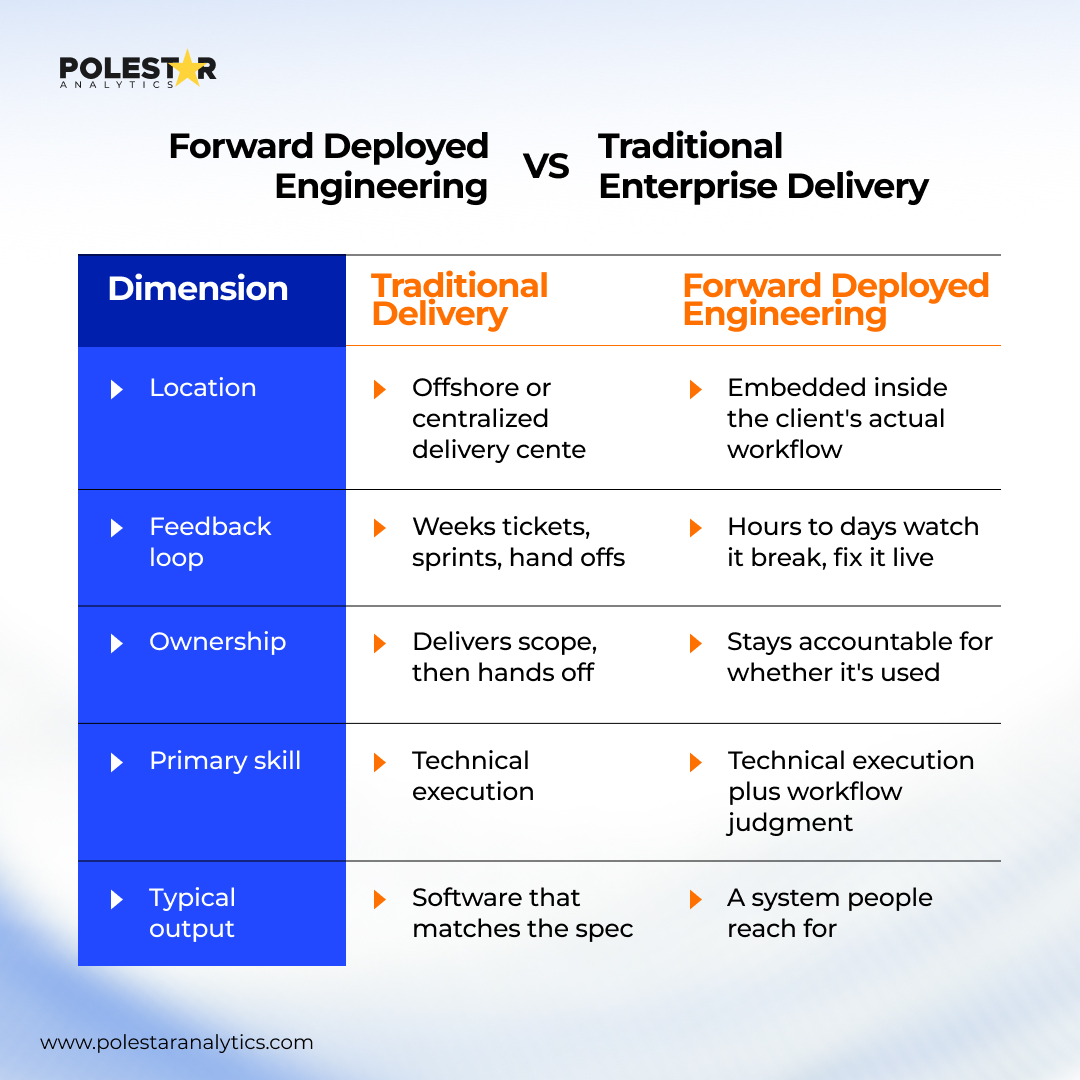
De uitdrukking is ontleend aan het leger, aan soldaten die aan het front gestationeerd zijn, niet op het hoofdkwartier. Palantir nam de term halverwege de jaren 2000 over om ingenieurs te beschrijven die samenwerkten met inlichtingen- en defensieteams en software ontwikkelden op de plek waar het werk daadwerkelijk plaatsvond, in plaats van die van elders te laten komen.
Ze dienden geen bekeuringen in. Ze keken in realtime toe hoe theorie en chaos botsten en het onderspit dolven.
Dat instinct bleef niet beperkt tot een niche, een gewoonte van één bedrijf. In juni 2026 investeerde AWS een miljard dollar in een speciale afdeling voor Forward Deployed Engineering, waarmee duizenden engineers rechtstreeks naar de faciliteiten van zakelijke klanten werden gestuurd. OpenAI en Anthropic hadden eerder dat jaar al vergelijkbare initiatieven opgezet. Een groeiend aantal bedrijven, hyperscalers, grensverleggende laboratoria en gespecialiseerde bedrijven biedt nu Forward Deployed Engineering-diensten aan als een aparte bedrijfslijn, en niet langer als een onderdeel van een groter contract. Wat begon als een ongebruikelijke aanwervingsfilosofie van één bedrijf, is uitgegroeid tot de manier waarop de grootste spelers in de sector inzetten om de implementatiekloof te dichten.
Software was vroeger voorspelbaar. Als het dinsdag werkte, werkte het woensdag ook. AI biedt die garantie niet, het dwaalt af, het stuit op onverwachte situaties en de nauwkeurigheid neemt stilletjes af naarmate de wereld verandert. Die instabiliteit is nieuw en precies daarom heeft een oud militair instinct een nieuwe plek gevonden in...AI-implementatie binnen bedrijven.
De cijfers laten zien hoe snel deze verandering heeft plaatsgevonden.Een onderzoek uit 2026 van executive searchbureau Christian & TimbersUit onderzoek bleek dat slechts 5-10% van de bedrijven aan het begin van het jaar van plan was om engineers in te huren die direct inzetbaar zouden zijn; in het tweede kwartaal was dat aantal gestegen naar 70%. De vraag zal naar verwachting met 2100% toenemen tegen het einde van het jaar. En de talentenpool is niet meegegroeid: hetzelfde onderzoek schat het aantal engineers in de VS met de benodigde expertise in toegepaste AI om betrouwbaar rendement te leveren op ongeveer 2000, tegenover een bredere markt voor engineers die direct inzetbaar zijn. Het is een krappe markt voor een functie die elk serieus bedrijf nu wil invullen.
India surft mee op dezelfde golf.CIEL HR meldde dat de vraag naar FDE-personeel met 130% is gestegen ten opzichte van vorig jaar., met 52 organisaties die in juli 2026 actief op zoek waren naar kandidaten voor deze functie, voornamelijk gevestigd in Bengaluru, Delhi-NCR en Hyderabad.
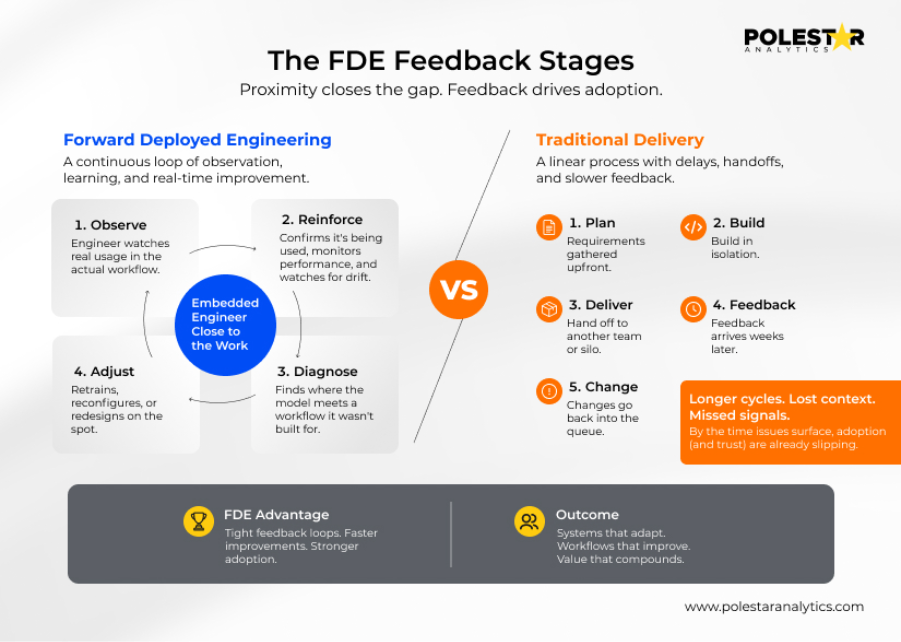
Een regionale winkelketen introduceerde vlak voor de feestdagen een model voor vraagvoorspelling. Op basis van historische gegevens presteerde het model uitstekend. Toen zorgde een lokale cricketfinale ervoor dat drie steden een avond lang leegliepen, en het model, dat nog nooit zo'n vraagschok had meegemaakt, bestelde te veel voorraad die niemand kon kopen.
Een team dat met tickets werkt, zou het hebben geregistreerd, beoordeeld en opgelost zodat het volgend jaar weer operationeel zou zijn. De engineer die verantwoordelijk was voor dat account was aanwezig toen de regionale manager het probleem signaleerde, detecteerde de anomalie dezelfde middag nog en paste de manier waarop het model omging met lokale pieken in gebeurtenissen aan voordat de volgende batch bestellingen werd verzonden. Niemand buiten die winkelgroep heeft ooit geweten dat er een probleem was geweest.
Dat is het hele verschil. Niet een slimmer model. Iemand die dichtbij genoeg was om het op tijd te zien.
Niets hiervan is gratis, en dat moeten we er ook duidelijk bij zeggen.
Ervaren engineers die ter plaatse worden ingezet, kosten meer dan een gecentraliseerd leveringsteam, en die kosten dalen niet op dezelfde manier als bij offshore teams. Er is ook een verborgen risico: als de engineer ter plaatse de enige is die begrijpt hoe het systeem werkt, heeft de klant geen capaciteit opgebouwd. Ze hebben een afhankelijkheid gecreëerd die verdwijnt zodra de samenwerking is afgerond.
Nabijheid brengt echter ook valkuilen met zich mee. Door dicht bij de problemen van een team te zitten, ontstaat de verleiding om steeds dezelfde, op maat gemaakte oplossing voor dat probleem te blijven ontwikkelen, ten koste van het bouwen van iets dat verder reikt dan dat team.
Soms is het eerlijke antwoord dat Forward Deployed Engineering helemaal niet de juiste aanpak is. Een stabiele omgeving met voorspelbare, goed gedocumenteerde workflows heeft geen ingebouwde engineer nodig om afwijkingen te signaleren; er zijn immers geen afwijkingen. En als er aan de klantzijde niemand is die het systeem kan overnemen zodra de engineer vertrekt, leidt die nabijheid alleen maar tot dure, ononderhouden werkzaamheden. Het model is alleen rendabel in rommelige, dynamische omgevingen. In rustige omgevingen niet.
Onder de gereedschappen en afkortingen gaat het bij vooruitgeschoven engineering om...nabijheidDoor ingenieurs nauw bij het werk te betrekken, kunnen ze zien waar modellen haperen, waar workflows vastlopen en waar gebruikers stilletjes hun vertrouwen verliezen. Want hoe sneller die afstand tussen probleem en oplossing verdwijnt, hoe groter de kans dat AI onderdeel wordt van het dagelijkse werk in plaats van een zoveelste mislukt pilotproject.
Elke echte AI-transformatie loopt uiteindelijk tegen dezelfde muur aan.bedrijfs-AI-strategieEen aanpak waarbij implementatie als een bijzaak wordt beschouwd, is niets meer dan een inkoopstrategie met een aantrekkelijkere naam. Organisaties die dit goed aanpakken, beschouwen hun AI-implementatiestrategie en hun personeelsstrategie als één document, en niet als twee teams die elkaar toevallig tegenkomen tijdens een statusupdate.
Dat is de hele inzet. Geen verdere automatisering. Iemand die dichtbij genoeg staat om de automatisering betrouwbaar te maken.
Verwacht dat een premium, ervaren en ingebed talent per uur duurder is dan gecentraliseerde dienstverlening, en dat het niet zo makkelijk afschaalbaar is als offshore teams. Het rendement zie je terug in de acceptatiegraad en de snelheid waarmee waarde wordt gerealiseerd, niet in het uurtarief.
Als de workflow stabiel en goed gedocumenteerd is en de data schoon is, volstaat standaardlevering meestal. FDE (Full Data Environment) verdient zijn waarde in rommelige, veranderende omgevingen, met nieuwe databronnen, verschuivende randgevallen en een hoge mate van gebruikersvertrouwen, waar afwijkingen eerder regel dan uitzondering zijn.
Dat hangt ervan af hoe essentieel AI is voor uw bedrijf en hoeveel bedrijfseigen proceskennis erbij komt kijken. Interne teams beschermen die kennis op de lange termijn, maar het kost tijd om die op te bouwen. Externe partners gaan sneller te werk, maar vereisen een bewuste kennisoverdracht die vanaf dag één in de samenwerking is vastgelegd. Anders huurt u een capaciteit in plaats van er zelf een op te bouwen.
De eerste, zichtbare successen zijn meestal binnen enkele weken merkbaar, niet binnen enkele maanden. Dat is nu juist het doel van een strakke feedbackloop. Volledige implementatie en interne kennisoverdracht duren langer, en elke partner die iets anders belooft, onderschat het leerproces.
Zorg ervoor dat gestructureerde kennisoverdracht een doel op zich is, en niet iets dat pas later plaatsvindt. Dit omvat documentatie, meelopen met een ervaren collega en een duidelijk moment waarop het werk wordt overgedragen. Dit alles moet worden vastgelegd vóór de start van het project, niet pas wanneer het bijna is afgerond.
Over de auteur
Data-verteller
De beste ideeën komen niet vanzelf. Ze wachten tot je er klaar voor bent.
Gerelateerde blog
 Aishwarya Saran