


 KaifInsiktsarkitekt
Registrera dig för att få de senaste insikterna och uppdateringarna inom teknik, AI och dataanalys, datavetenskap och innovationer från Polestar Analytics.
 Sammanfatta detta blogginlägg med:
| Den bästa programvaran för hantering av rörelsekapital diagnostiserar varför likvida medel rör sig, simulerar beslut mot verkliga finansiella modeller och driver genomförandet, inte bara rapporterar mätvärden. |
TL;DR
Rörelsekapital läcker fortfarande ut pengar i företagsskala,PwC:s studie från 2026visar att överskottet ligger på 1,84 biljoner euro i balansräkningarna. De flesta dashboards ser det för sent. Den här guiden förklarar hur man utvärderar programvara för rörelsekapitalhantering baserat på rotorsaksdiagnos, validerad simulering och exekvering, och hur CapitalPulse från Polestar Analytics sluter cirkeln.
I ett decennium var systemet för hantering av rörelsekapital ett rapporteringslager. Det berättade för dig att din distributionsnätsdrift (DSO) hade ökat. Det berättade sällan varför, och aldrig vad du skulle göra åt det före kvartalsslutet.
Den luckan är dyr nu.PwC:s rörelsekapitalstudie 25/26fann att antalet utestående försäljningsdagar ökade med 5,7 % under det senaste decenniet, från 47,3 till 50,0 dagar, medan antalet utestående lagerdagar för de mest kontantintensiva västerländska sektorerna ökade med 13,6 %, vilket bidrog med uppskattningsvis 300 miljarder euro i överskottsrörelsekapital. Samma rapport identifierar 1,84 biljoner euro i överskottsrörelsekapital globalt som skulle kunna frigöras för investeringar.
Finanschefer har äntligen också mandat att åtgärda det med teknologi.Deloittes undersökning om CFO-signaler för fjärde kvartalet 202587 % av finanscheferna sa att AI kommer att vara extremt eller mycket viktigt för deras finansverksamhet år 2026, och 54 % nämnde integrationAI-agenteren högsta prioritet för transformation, före arbete med datakvalitet.
Sätt ihop dessa och köpfrågan skärps. Du väljer inte längre ett verktyg för rörelsekapitalhantering för att se kontanter. Du väljer ett för att frigöra dem.
Den mest effektiva programvaran för rörelsekapitalhantering år 2026 beror inte på antalet KPI:er som visas, utan snarare på hur många manuella kontaktpunkter det finns från en avvikelse till implementeringen av ett beslut. Det är här pengarna och tiden försvinner.
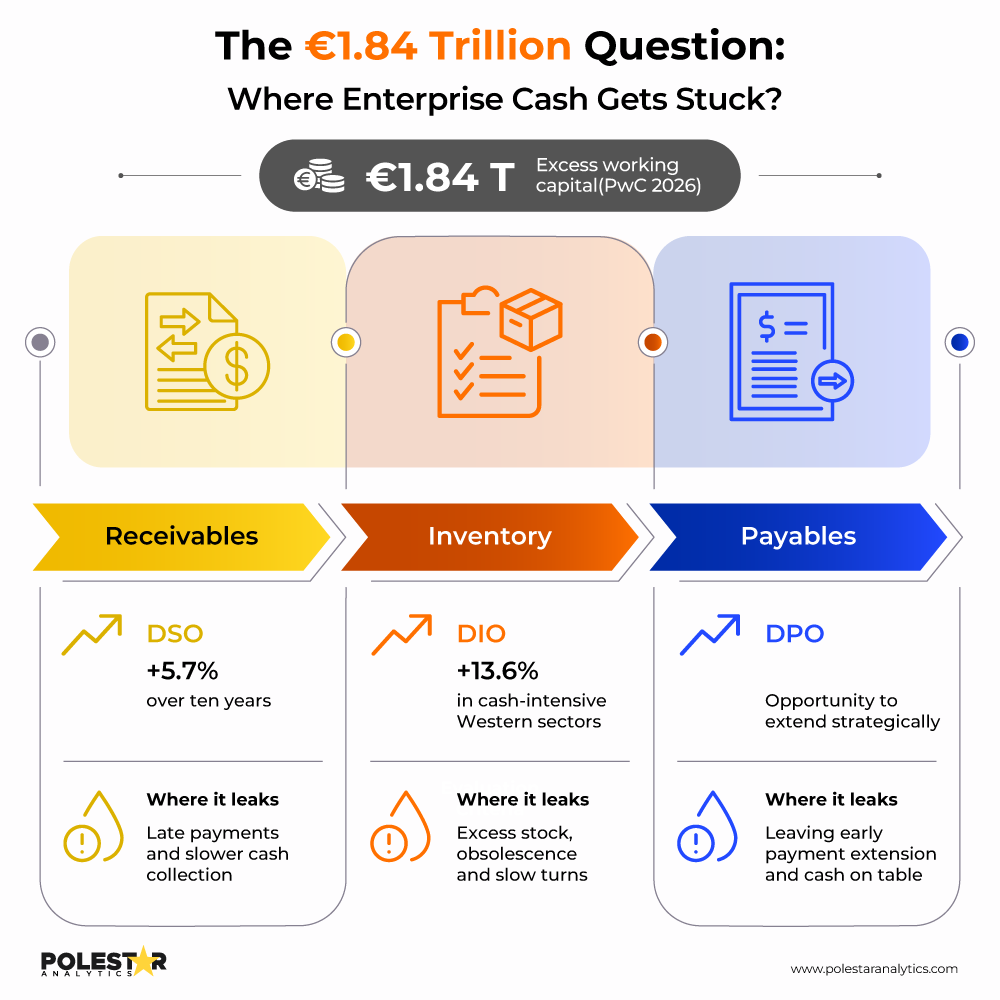
Termen "programvara för rörelsekapitalhantering" omfattar nu fyra distinkta produktkategorier som sällan är jämförbara. Innan man utvärderar leverantörer är det bra att skilja på vad varje typ faktiskt gör och var den slutar.
Plattformar för information om rörelsekapitalär den framväxande kategorin, vikningsdetektering, diagnos, simulering och exekvering i ett arbetsflöde.CapitalPulse av Polestar Analyticssitter här, och den här guiden använder den kategorin som riktmärke.
För ett bredare sammanhang kring hur finansfunktioner omstruktureras kring AI, se Polestar Analytics arbete medhur FinOps i GCC:er förändrar finansverksamhetenochinsikter om upphandlingär en användbar primer.
Använd detta som din poängsättningsmatris. Varje förmåga är en fråga att ställa till vilken leverantör som helst.
Sammantaget beskriver dessa fem frågor en plattform som de flesta företag ännu inte äger: en plattform som omvandlar fragmenterad finansdata till en diagnostiserad orsak, ett validerat scenario och en spårad åtgärd, i ett arbetsflöde som finanssektorn kan försvara. Det är precis detta som skiljer sig åt.CapitalPulse av Polestar Analyticsbyggdes för att stängas.
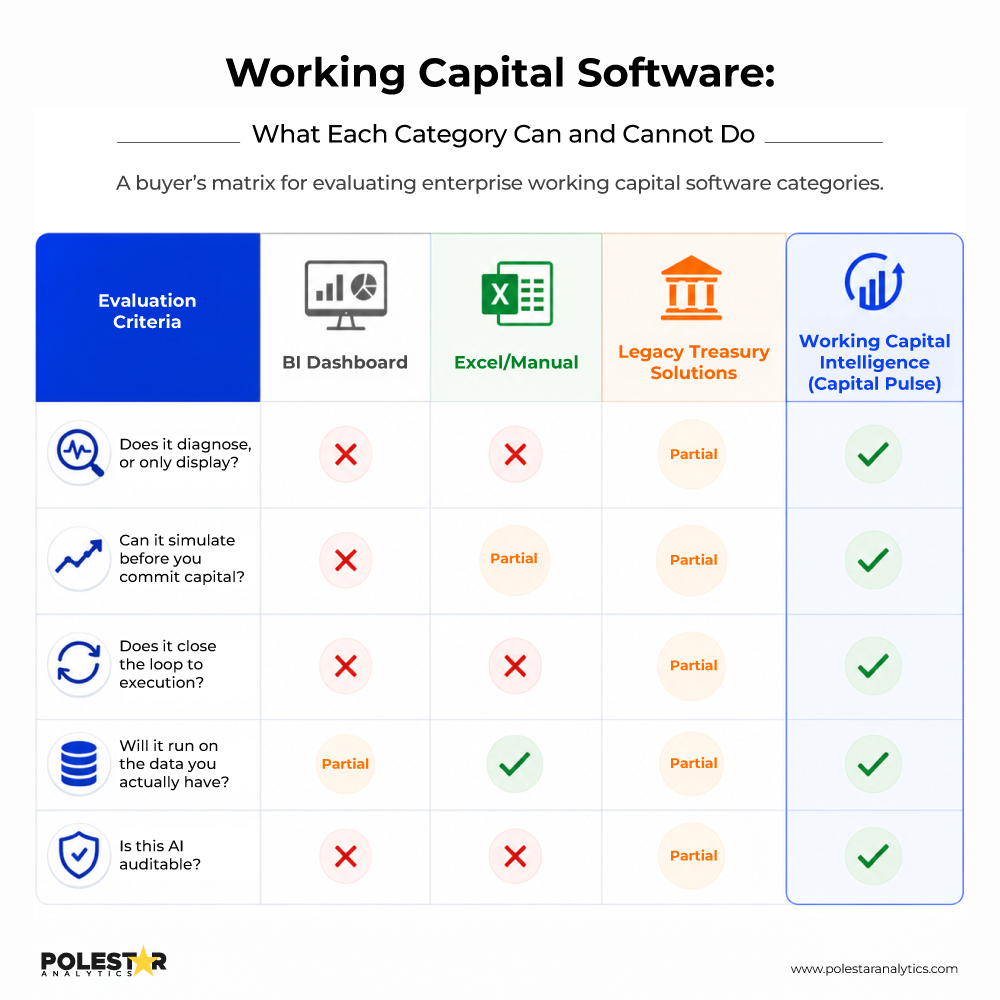
Mappad till de fem frågorna ovan är CapitalPulsePolestar Analytics AI-drivna plattform för rörelsekapitalinformation, byggd av ett team med djupgåendefinansiell analysarv. Varje modul besvarar ett av kriterierna i köparens ramverk:
Två designval sticker ut. För det första är den branschoberoende och anpassar sina nyckeltal till den vertikala marknaden, där lagerdagar spelar roll för en tillverkare, mindre för ett mjukvaruföretag. För det andra är den positionerad för att komplettera planeringsverktyg snarare än att ersätta dem, vilket är anledningen till attAnaplan-partnerskapetfrågor. För att utforska hela spektrumet av vad CapitalPulse kan göra,se det i aktionFör det bredare agentutförandelagret, e-boken om att flyttafrån datakaos till intelligent handlingär en naturlig nästa läsning.
Bra verktyg kodar för goda vanor. PwC:s riktlinjer för 2026 är direkta: teknik bör möjliggöra starkare rörelsekapitaldisciplin, ge team realtidsinsikt i likvida medel och hjälpa styrelser att ta hänsyn till rörelsekapitalets prestanda i snabbare beslut. Några metoder som är värda att implementera:
2026 års kortlista är inte det verktyg som visar det renaste DSO-diagrammet. Det är det som diagnostiserar varför ett mätvärde har ändrats, validerar korrigeringen mot en verklig finansiell modell och omvandlar varje accepterad rekommendation till en spårad åtgärd med en tydlig ägare. Poängsätt vilken programvara för rörelsekapitalhantering som helst utifrån dessa fem kriterier och de flesta kommer att falla ut vid fråga ett. För företag som behöver en plattform byggd för att sluta den loopen från början till slut,CapitalPulse av Polestar Analyticsär där den beslutsmotorn redan finns.
Transaktioner loggas med hjälp av ERP-systemet, som representeras av BI-instrumentpanelen, men ingen anger orsaker bakom förändringarna i din kassakonverteringscykel eller vad som bör göras härnäst. Programvaran för hantering av rörelsekapital kommer att lägga till detektering, orsaksanalys, simulering och övervakning till all information. Eftersom informationen om rörelsekapitalet är spridd över många ERP-system ligger dess betydelse i att samla in och analysera denna information.
Fyra saker bör prioriteras: rotorsaksanalys framför rapportering, scenariovalidering genom finansiella/treasury-modeller, sluten exekvering med en revisionslogg och acceptans av rörig data från flera källor. Det är mycket viktigt att integrera i planeringsverktyg som Anaplan eftersom beslut måste valideras mot kassaflödesbegränsningar innan de genomförs.
Nej. De starkaste rörelsekapitallösningarna kompletterar dem. Ett verktyg som CapitalPulse tillhandahåller de operativa drivkrafterna och AI-genererade scenarierna, och skickar dem sedan till Anaplan för detaljerad kassaprognos och validering, vilket sluter loopen mellan operativ verklighet och finansiell planering utan manuell Excel-avstämning däremellan.
Maskininlärning används för att identifiera avvikelser och korrelationer inom redovisnings-, leverans-, lager- och treasurydata, och en språkmodell används för att kategorisera data som antingen informativa, varnings- eller kritiska och för att ge en förklaring i klartext. Problemet som identifieras genom denna process skulle inte kunna identifieras utan ett flertal manuella avstämningar, till exempel att kunden beställer kontinuerligt medan de är mer än 180 dagar försenade.
Börja med att visa värdet av ett arbetsflöde med hög volym och låg risk och bevisa den ekonomiska effekten innan du expanderar. Plattformar som tar emot data som de är, snarare än att genomföra en omfattande harmoniseringsinsats, minskar tiden till insikter från månader till veckor, vanligtvis skillnaden mellan ett pilotprojekt som skalas upp och ett som stannar av.
Sluta reagera på kassaflödesproblem. Upptäck risker tidigt, validera den ekonomiska effekten av varje åtgärd och genomför med tillförsikt.
Boka en CapitalPulse AI-demoOm författaren
Insiktsarkitekt
Det finns inga osäkerheter, bara möjligheter och sannolikheter som formas till bevis genom data.
Relaterad blogg
Kaif
 Aishwarya Saran