


 Kshitij GuptaData Strategist

Registrera dig för att få de senaste insikterna och uppdateringarna inom teknik, AI och dataanalys, datavetenskap och innovationer från Polestar Analytics.
 Sammanfatta detta blogginlägg med:
| Databricks cross-engine ABAC lets you write tag-based row filters and column masks once in Unity Catalog, and external engines like Spark respect them. |
TL;DR
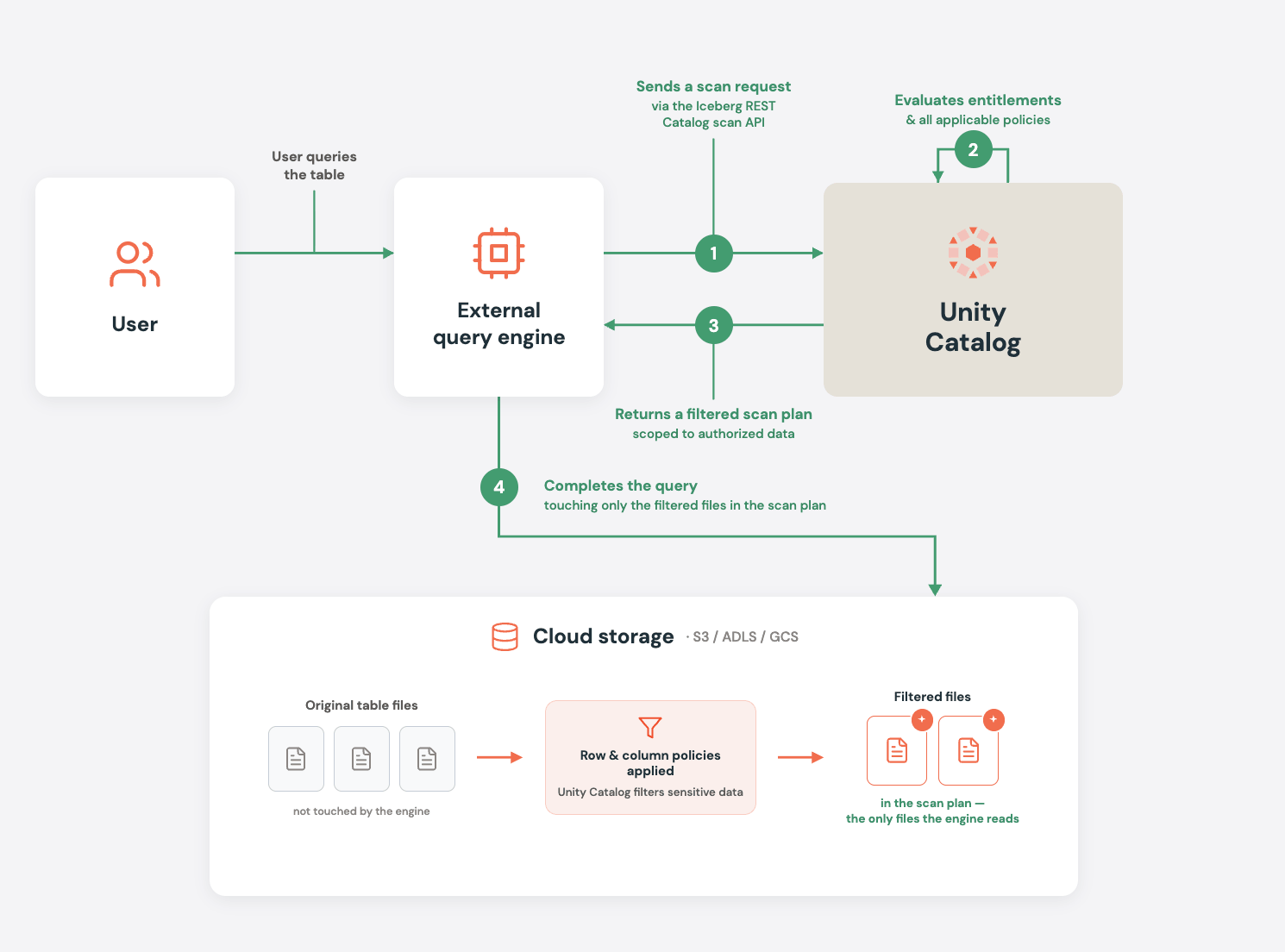
Databricks ABAC, the attribute-based access control (ABAC) built into Databricks Unity Catalog, used to stop at the Databricks boundary. Databricks cross-engine ABAC, generally available since October 2026, carries it further. When an external engine such as Apache Spark reads a governed table, Databricks filters and masks the data on serverless compute first, so the engine only sees what that user may see.
It's read-only for governed tables, it costs serverless DBUs, and it's only as good as your tagging. Get the tags right and one policy covers every supported engine.
Picture a hospital data team that masks patient phone numbers in Databricks SQL. The policy's tested and the auditors are happy. Then a data scientist points open-source Spark, running on another cluster, at the same table. The phone numbers come back in plain text. Nobody broke a rule. The rule just never left the building.
The risk is real, and it's expensive. IBM's 2025 Cost of a Data Breach report found 97% of organizations hit by an AI-related breach lacked proper AI access controls. A breach now costs $4.44 million on average worldwide, and a record $10.22 million in the US.
Databricks cross-engine ABAC is the fix for that hospital scenario, and the most direct answer yet to how to enforce data access policies across multiple engines. You write the policy once in Unity Catalog, and supported engines have to respect it.
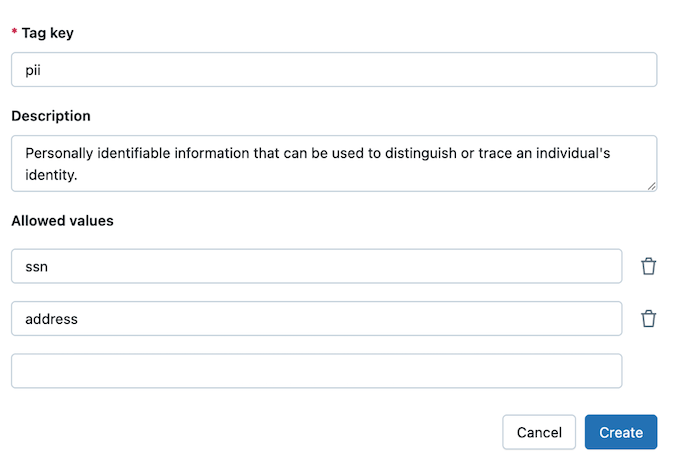
Start with how ABAC works in Databricks. Databricks ABAC runs on tags. You tag a column as pii, or a table with region = EU, then write one policy: mask anything tagged pii unless the reader belongs to the privacy group. Any new table carrying that tag is covered the day it lands, so you skip the per-table grants and the pile of copied views.
Cross-engine ABAC takes that same policy past Databricks compute, which is where it used to stop. It went into preview in late 2025, widened to beta during 2026, and reached general availability in October 2026. An external engine can now read a Unity Catalog managed table and still get the row filters and column masks applied. That's cross-engine data governance in Databricks in one sentence.
Databricks says Unity Catalog is the first catalog to enforce ABAC across engines. Treat "first" as the vendor's word, but the reach behind it is real: the platform is used by more than 20,000 organizations, 70% of the Fortune 500 among them.
Open table formats made sharing easy. Too easy, maybe. Ryft's 2026 study of 252 senior data leaders found 58% already run business-critical analytics on Apache Iceberg, and 79% plan to move their remaining data onto it within a year. Most of them also admitted they still lean on custom scripts and in-house tooling for access control.
That's the core problem with data access governance today. Every engine brings its own permission model, so every engine becomes one more place for policy to drift.
Did you know?
In IBM's 2025 study, 63% of breached organizations either had no AI governance policy or were still writing one.
AI agents pile on more pressure. In a Q2 2026 Gartner survey, 71% of organizations said they expect to deploy agentic AI within a year, while only 21% had agentic AI governance in place. Agents query from wherever they're deployed. A mask that only works inside one product won't follow them.
Legacy systems break in ways no one plans for. See what really goes wrong in a warehouse-to-Databricks migration and how to stay a step ahead.
Read the Migration GuideThe clever bit is where enforcement happens. Databricks does the filtering itself, before any data leaves, since most outside engines have no policy runtime at all. That server-side step is what makes it real cross-engine access control.
This matters more as ML and AI work moves off a single platform. In Ryft's survey, 95% of leaders were using or planning to use Iceberg for AI and ML workloads. IBM, meanwhile, found 13% of organizations had already reported breaches of AI models or applications.
There are limits, and you should know them before you promise anything to your CISO.
| Constraint | What it means in practice |
|---|---|
| Reads only | Writers need an exemption from the policy |
| Managed tables | Tables must be Unity Catalog managed, with catalog commits enabled |
| Column types | No filtering on VARIANT or BINARY columns |
| Mask functions | A mask must return the same type as the column |
| Cost | Enforcement is billed as serverless compute |
Large aggregations can also slow down, so test your heaviest queries early.
Agents query from wherever they're deployed, so your policies need to go with them. Get the main takeaways from the Databricks Genie webinars on Genie One, ontology, agents and code.
Explore the Genie RecapIf you're working out how to implement cross-platform data governance, the tech is the easy part. Gartner found organizations with successful AI initiatives invest up to 4 times more in data and analytics foundations, governance included, than those with poor results. It also predicts 60% of organizations that ignore data governance culture will fail to govern AI successfully by 2027.
At Polestar Analytics, when the AI & Data Governance team takes on ABAC work, the first job is a tag audit, because a policy can only act on tags that exist. They then build classification into the same Databricks medallion pipelines that feed the business, so new tables arrive already tagged. And since they deploy across Databricks, Microsoft Fabric and Snowflake, policies that travel with the data save our clients a lot of duplicate rule-writing.
Cash is hiding in your receivables, payables and inventory. See how agentic AI on governed Databricks data finds it and turns it into action.
Find the Hidden CashDatabricks cross-engine ABAC finally lets one policy follow your data, whichever supported engine reads it. The hard work sits underneath, in tagging, ownership and culture. Get those right, start with a few broad policies, and cross-platform data governance stops being a pile of scripts.
The documented clients today are Apache Spark through the Delta-Spark or Iceberg-Spark connectors. Enforcement sits behind the Iceberg REST catalog scan-planning APIs, so other engines can join as they support server-side planning. Check the supported-clients list in the Databricks docs before you build around a specific engine.
Role-based access control (RBAC) grants a role rights on specific objects, table by table. ABAC checks attributes at query time, such as a column's tag and the reader's group, so one policy covers every table with that tag. Most teams keep RBAC grants for schema-level access and use ABAC for row and column rules.
Through row filters and column masks in Unity Catalog. A row filter decides which rows a user can see, and a column mask swaps a sensitive value for a masked one. You can attach them table by table or let ABAC policies apply them by tag. Either way, they're enforced on external reads too, so existing ones don't need rewriting.
Om författaren
Data Strategist
Most data answers questions. The right data changes direction.
Relaterad blogg
 Mohana Bhrugubanda