


 Astha ChadhaDatas öden
Registrera dig för att få de senaste insikterna och uppdateringarna inom teknik, AI och dataanalys, datavetenskap och innovationer från Polestar Analytics.
 Sammanfatta detta blogginlägg med:
| AI-agentobservabilitet är den körtidsmetod som spårar, mäter och styr alla beslut som autonoma företagsagenter fattar, och omvandlar resonemang till granskningsbart och felsökbart beteende. |
Redaktörens anmärkning:Den här artikeln riktar sig till dataexperter, AI-plattformschefer och företagsarkitekterimplementera AI-agenter i affärsplaneringsprocesser(efterfrågan, utbud, finansiering, handelsfrämjande). Lärdomen förväntas vara bekant med LLMOps, och artikeln fördjupar sig i observerbarhetsproblem med dagens stackar.
Den svåra siffran är denna: Enligt Gartner kommer över 40 % av agentbaserade AI-initiativ att misslyckas på grund av stigande kostnader, bristande affärsvärde och otillräcklig riskhantering i slutet av 2027. Å andra sidan skalar endast 23 % av organisationerna upp ett agentbaserat AI-system någonstans i företaget (McKinsey, State of AI). Gartners CIO-undersökning från 2026 tyder på att 17 % av agenterna har implementerats.
Mönstret bakom dessa siffror är inte modellkvalitet. Det är synlighet. Planeringsagenter, de som skriver om prognoser, omfördelar budgetar och verkställer beslut om handelsfrämjande åtgärder, arbetar över system där traditionella APM-verktyg är tysta. Drifttiden är grön. Latensen ser bra ut. Agenten rekommenderade fortfarande en ombeställningspunkt som orsakar slut på lager med hjälp av en föråldrad efterfrågesignal, och ingen kan rekonstruera varför.
Det är det rekonstruktionsproblemetAI-agentobservabilitetfinns för att lösa.
Observerbar AI avser förmågan att övervaka, tolka och hantera körtidsbeteendet hos autonoma AI-agenter över hela spektrumet av beslutsprocessen, från användaravsikt, planeringsprocess, val av verktyg, hämtning av data, efterlevnad av policyer till handling. Detta skiljer sig från LLM-observabilitet som fokuserar på prompter, tokens och latens, vilket lämnar företagsrisker exponerade i det semantiska lagret.
I affärsplaneringssammanhang innebär detta att man besvarar tre frågor på begäran:
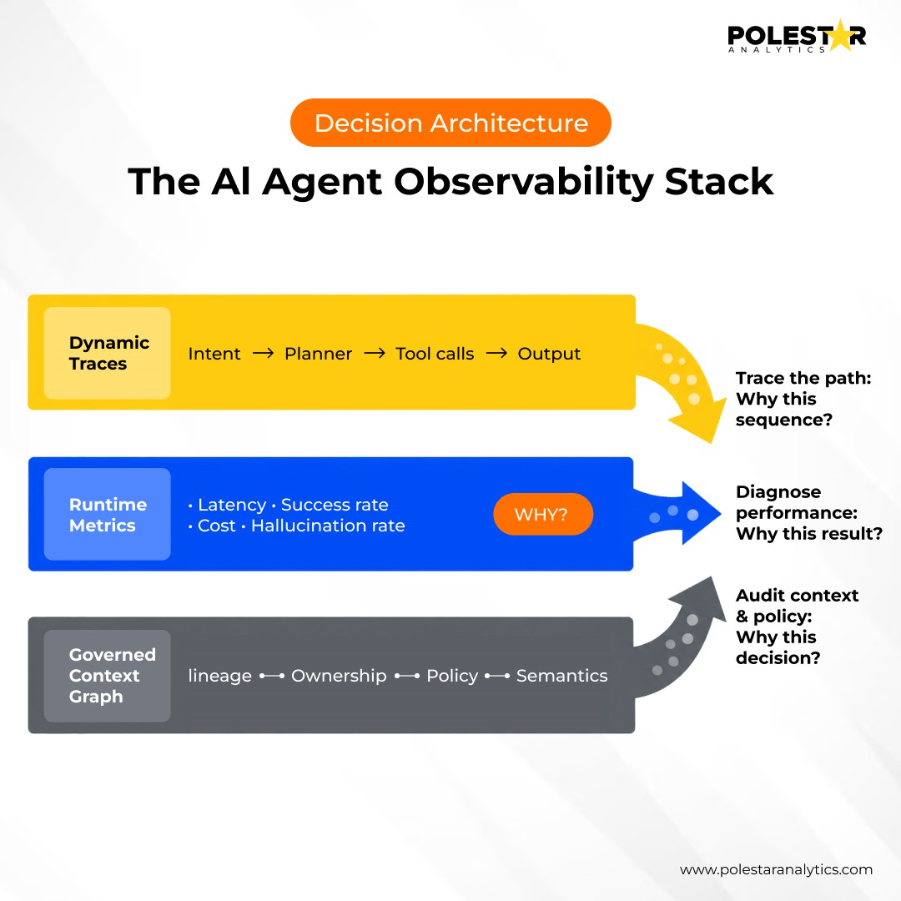
Effektiv agentobservabilitet vilar på tre sammankopplade lager. Varje lager adresserar en felklass som de andra inte kan se.
| Komponent | Vad den fångar | Felklass Det förhindrar |
|---|---|---|
| Dynamiska spår från början till slut | Hela avsiktskedjan, planerarbeslut, verktygsanrop, dataläsningar, utdata | Tyst verktygsmissbruk, oförklarade beslut |
| Körtidsmätvärden | Latens, kostnad, framgångsgrad, tokeneffektivitet, hallucinationsgrad | Kostnadsutbrott, kvalitetsregression |
| Kontextuella loggar kopplade till ett styrningsdiagram | Härstamning, ägarskap, policystatus, semantiska definitioner vid beslutstillfället | Regelöverträdelse, skuggagenter, kontextförskjutning |
Spår ensamma visar vad som hände. Mätvärden visar hur ofta. Endast det styrningslänkade logglagret visarvarför, vilket är det lager som de flesta planeringsteam hoppar över och sedan bygger upp igen efter sin första obduktion.
En företagsklassAI-agentobservationsplattformmåste gå bortom dashboards. Baserat på IBMs Think 2026 CEO Study som visar att endast25 %av AI-initiativen har levererat förväntad avkastning; den avgörande faktorn mellan vinnarna och de övergivna pilotprojekten är en specifik kompetens:
DessaObservationsmöjligheter för AI-agenterär det som omvandlar övervakning från en reaktiv instrumentpanel till ett kontrollplan för autonom planering.
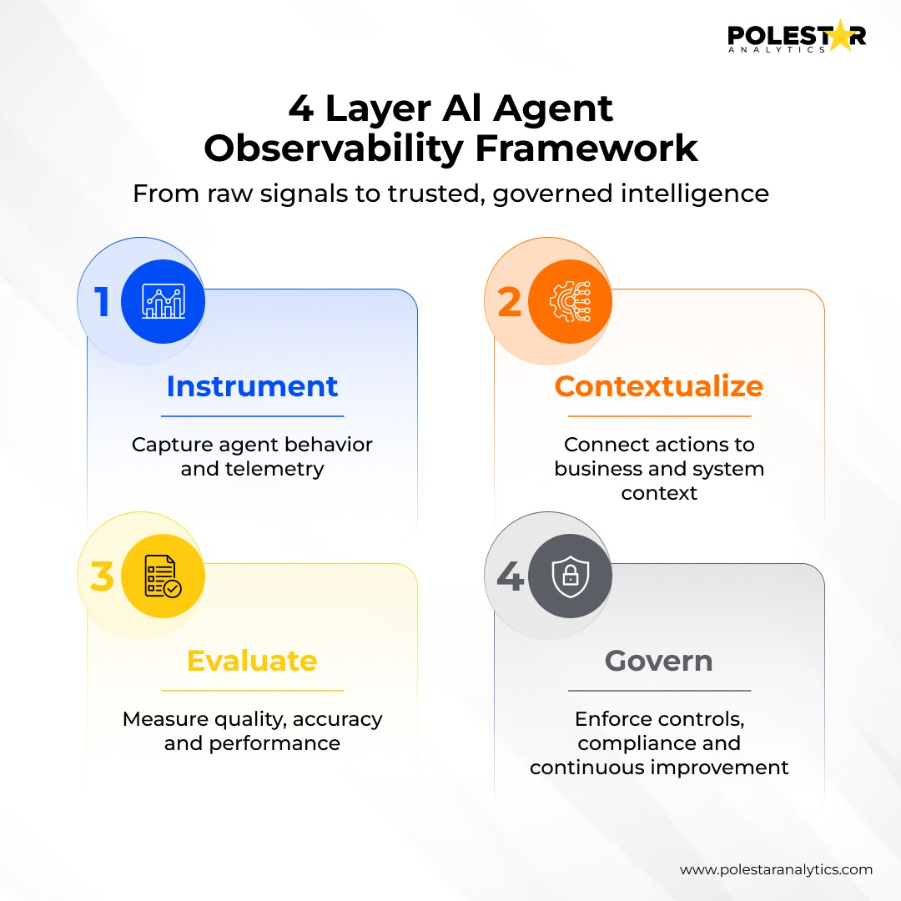
En praktiskRamverk för observerbarhet för AI-agenter för företagsplaneringmappar till fyra lager:
Det är detta lager-på-lager-mönster som skiljereffektiv observerbarhet för AI-agenterfrån en Grafana-instrumentpanel bultad på en LLM-gateway.
DeVerktyg för observerbarhet för AI-agentermarknaden delas upp i tre läger, ochföretagsplaneringteam behöver vanligtvis komponenter från alla tre:
Det gap som snubblar över de flesta företagsstackar: instrumentering utan styrningskontext. Du kan se verktygsanropet. Du kan inte se om den datauppsättning som den frågade efter var certifierad, ägd eller redan flaggad som låg kvalitet. Det är där80 %av företagsapplikationer som levererades under första kvartalet 2026 med minst en AI-agent (Gartner) är exponerade.
Fyra metoder skiljer konsekvent planeringsteam vars agenter överlever övergången från pilot till produktion:
Polestar Analyticsär enAnaplan implementeringspartneroch AI-leveranspartner, som bygger AI-aktiverade uppkopplade planeringslösningar för finans- och leveranskedjeteam. Vi designar observerbarhet i agentplaneringen från arkitekturstadiet, inte som ett lager efter driftsättning. Inom integrerad affärsplanering, optimering av handelsfrämjande åtgärder och finansiell planering integrerar vi spårningsinstrument, kontextbindning och utvärderingsloopar direkt i agentens livscykel.
Mönstret som Polestar Analytics använder för planeringsklienter:
Resultatet blir planeringsautonomi som ledare kan försvara gentemot revisorer och finanschefen, inte bara visa för en granskningskommitté.
Förtroende bygger på transparens, inte autonomi. Observerbarheten hos AI-agenten dokumenterar alla beslut som fattas under planeringsprocessen tillsammans med informationskällor, resonemangsprocesser, verktyg som används och styrningspolicyer som påverkar beslutet. Detta gör det möjligt för företagsledare att validera varför en agent rekommenderade en prognosjustering, lagerförändring eller budgetomfördelning innan de agerar utifrån den, vilket gör autonoma beslut förklarliga och granskningsbara.
Observerbarhet är en komplett exekveringsspårning som fångar allt från användarens begäran till den resonemangsprocess som använts, de verktygsanrop som gjorts, de datamängder som använts och de policyer som kontrollerats. Detta hjälper en att fastställa orsaken bakom problemet och om det berodde på användning av föråldrad data eller data som inte certifierats, felaktiga affärsregler, felaktigt verktygsanrop eller felaktigt resonemang.
Det hjälper till att förhindra följande problem som kan uppstå i organisationer: beslutsfattande med hjälp av föråldrad eller ocertifierad data, policyöverträdelser, hallucinationer, obehöriga AI-agenter som körs i bakgrunden och förändringar i definitionen av kontext.
Observerbarhet är ett kollektivt ansvar, där AI-plattformsteamet tar hand om instrumentering och körtidsövervakning.datastyrningTeamet garanterar pålitligt sammanhang och härkomst, medan affärsteamen fortfarande behåller ansvaret för agentens mål, beslutsgränser och dess resultat. Denna samarbetsmodell säkerställer att autonoma agenter förblir i linje med affärsstrategin under sin livscykel.
Det gör det möjligt för organisationer att skala upp sina AI-agenter bortom pilotfasen genom att göra beslut mätbara, förståeliga och förbättringsbara. Det ökar hastigheten för att lösa incidenter och felsöka, förbättrar efterlevnaden och hjälper teamet att upptäcka prestandaflaskhalsar innan de påverkar planeringsbeslut. Följaktligen skalar företag sina AI-initiativ med minimala operativa risker och maximalt affärsvärde.
Om författaren
Datas öden
Inom data, liksom i schack, ligger den verkliga kraften i framsynthet.
Relaterad blogg
 Ali Kidwai
Astha Chadha
Ali Kidwai
Astha Chadha