Dynamic pricing uses advanced algorithms that analyze vast amounts of data in real-time, allowing businesses to adjust their prices based on Supply & demand, customer segments, time-based events, competitor pricing, and inventory levels With a carefully crafted dynamic pricing strategies organizations can achieve various goals like Increase in revenue, improve inventory management, enhance customer satisfaction, and gain competitive advantage.
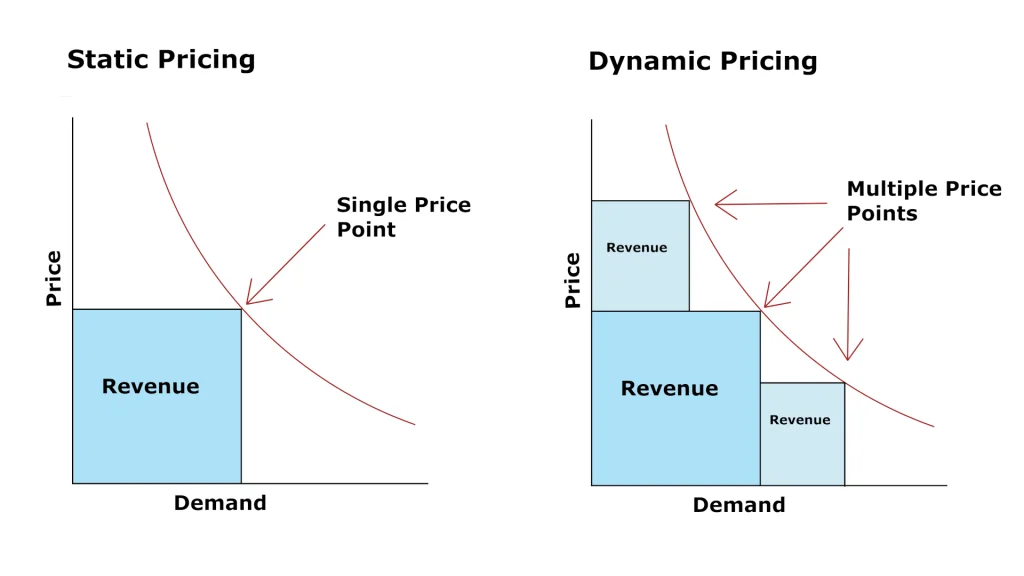 Static vs Dynamic Pricing
- Time-based Pricing- The prices are adjusted according to demand surges or reduction cycle. It can be done through historical analysis of demand change trends or through real-time tracking.
- Inventory-based Pricing- In this strategy, the prices change according to the inventory levels. For example, reducing the price to clear excess stocks.
- Competition-based Pricing- Change your pricing in response to the pricing strategies of the competitor, which can help you stay relevant in the market.
- Event-based Pricing- Adjust pricing based on recent event to capitalize on opportunities and respond to changing market trends.
- Peak Pricing- These strategies focus on rising the prices during seasons that increase demand. This strategy has a slower cycle compared to that of time-based pricing.
Dynamic pricing considers the following factors-
- Supply and Demand- Dynamic pricing directly dependent on the demand levels, i.e., when the demand is high prices increase while prices fall with falling demand.
- Customer Segments- Different customer segments can be charged different prices based on their location, buying behavior, or loyalty status.
- Competitor Prices- To remain competitive competitor, and ensure business stays in line with market trends, dynamic pricing needs to track and adjust the prices in real-time according to the competitors.
- Time-Based Adjustments- Prices may be needed to adjusted rise or fall based on the time of day, season, or holidays.
- Inventory Levels- When stock is low, prices may rise to balance supply with demand.
In the current scenario, with actionable insights in place, you are enabled to make insight-driven decisions at all levels of your organization. Polestar Analytics’ functional expertise can help you implement robust self-service analytics, data management solutions, and rich visualizations to enhance your dynamic pricing analytics strategies and maximize business value.
To know more on dynamic pricing, explore this blog