Ali KidwaiInnehållsarkitekt
Registrera dig för att få de senaste insikterna och uppdateringarna inom teknik, AI och dataanalys, datavetenskap och innovationer från Polestar Analytics.
 Sammanfatta detta blogginlägg med:
Redaktörens anmärkning:Den här bloggen utforskar varför rörelsekapitalhantering blir en strategisk prioritet för konsumtionsbaserade företag, hur GCC:er kan fungera som informationsnav för AR, AP, lager och kassaflöde, och hur CapitalPulse hjälper finansteam att upptäcka fastnade kontanter, diagnostisera bakomliggande orsaker och prioritera åtgärder snabbare.
| CPG-företag använder GCC-ledda nav för hantering av rörelsekapital för att förena insyn i AR, AP, lager och kassaflöde, vilket hjälper till att frigöra fastlåsta kontanter snabbare över fragmenterade marknader. |
Den senastePwC:s rörelsekapitalstudie— som omfattade 19 000 börsnoterade företag — fann 1,84 biljoner euro i överskottsrörelsekapital som stod overksamt på globala balansräkningar.
Bara i Europa har antalet utestående dagar i lager för kontantintensiva sektorer nått en tioårshögsta nivå, vilket bidrar till uppskattningsvis300 miljarder euroav överskottsrörelsekapital. Globala distributionsnätsoperationer har ökat med 5,7 % under det senaste decenniet, vilket har stramat åt likviditeten och gjort det svårare för företag att frigöra tillgängliga likvida medel.
Betalningscyklerna för återförsäljare sträcks ut. Kampanjledda efterfrågesvängningar skapar whiplash i lagret. Eftersläpningar i avdrag binder i tysthet upp likvida medel. Stora företag har hållit sina siffror i schack genom att luta sig mot leverantörer och driva DPO högre för att hamstra likvida medel, vilket motverkar försämringen av DSO och DIO, en strategi som maskerar det underliggande problemet snarare än att lösa det.
Därför bygger ledande CPG-företag upp informationscentraler för rörelsekapital inom sinaGlobala kompetenscentraDessa hubbar är inte utformade för att producera fler dashboards, och de är inte utformade för att ersätta CFO, treasury eller regionala finansteam. De är byggda för att bli det sammanbindande intelligenslagret mellan dem, upptäcka risker tidigare, diagnostisera de underliggande affärsdrivarna och hjälpa affärsteam att prioritera åtgärder innan pengar fastnar.
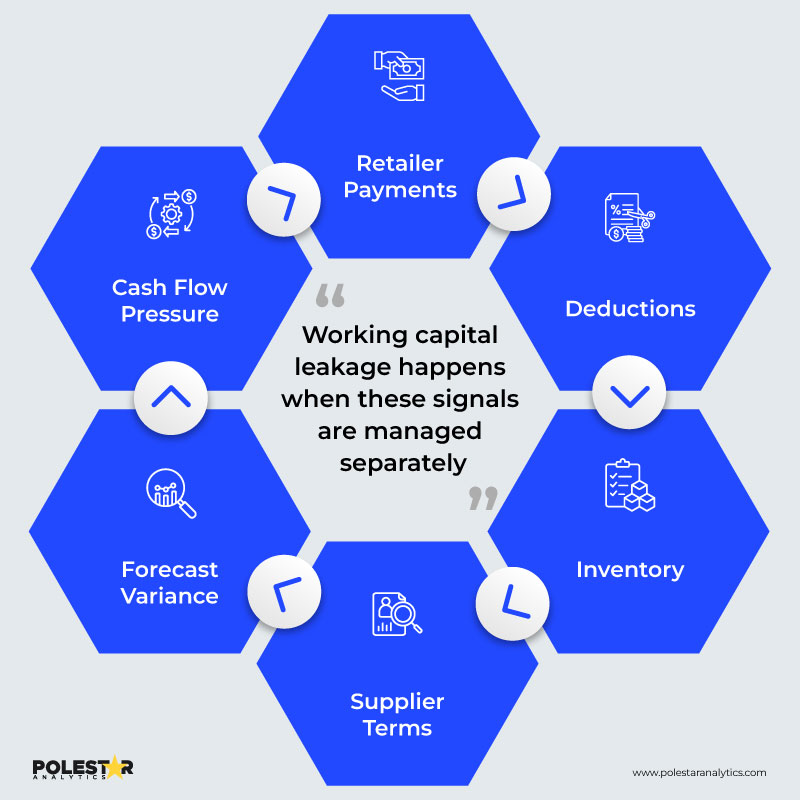
Problemet är inte attCPG-företagsaknar data om rörelsekapital. Problemet är att data finns i ERP-, AR-, AP-, lager-, försäljnings-, leveranskedje-, treasury- och detaljhandelssystem utan ett gemensamt beslutslager. I konsumentvaror orsakas rörelsekapitalläckage sällan av ett enda stort fel. Det orsakas av hundratals små förseningar, avvikelser och osammanhängande beslut.
Regionala team har nära till marknaden, och den närheten är verkligen värdefull. Men den drar dem mot lokala prioriteringar: försäljningstillväxt, distributörsrelationer, produkttillgänglighet och kortsiktiga affärsmål.
Rörelsekapital kräver dock en företagsomfattande synvinkel.
En kreditförlängning som beviljas på en marknad kan påverka det globala kassaflödet. Överskottslager i en region kan vara osynligt för en annan region som står inför efterfrågan. Ett beslut om leverantörsbetalning kan skapa onödigt likviditetstryck om det inte är kopplat till insyn i treasury-systemet. En eftersläpning i avdrag kan verka som en operativ olägenhet, men dess ekonomiska påverkan fördelas över kvartalen.
| Till exempel -Tänk dig en global snackstillverkare som är verksam på ett dussin marknader, där var och en förhandlar om sina egna distributörsvillkor och hanterar sin egen avdragskö. Ingen enskild regions siffror ser alarmerande ut på egen hand. Men när ett GCC-baserat team konsoliderar bilden framträder ett mönster: tre marknader förlänger kreditvillkor utöver policyn för att skydda volymen, två har orörda avdragsposter i över 90 dagar, och en har sex veckors överskottslager från en missad kampanjprognos. Inget av detta visar sig som ett enskilt misslyckande. Det visar sig som en långsam, sammansatt belastning på företagets kassaflöde som bara blir synlig när informationen ses tillsammans snarare än marknad för marknad. |
Lokala team ser marknaden. Huvudkontoret ser det ekonomiska resultatet.GCC, som sitter mellan dem, kan bli det underrättelselager som förbinder bådaDet är därför många konsumtionsbaserade företag går från regionledda uppföljningar av rörelsekapital till GCC-stödd orkestrering av rörelsekapital.
Omfattningen av GCC-förskjutningen i CPG är nu svår att ignorera.
Indien är nu ett globalt nav förDetaljhandel och konsumentprodukters GCC:er, med över 70 företag som sysselsätter fler än 85 000 yrkesverksamma. Detta antal förväntas öka avsevärt, med över 25 nya GCC:er sannolikt under de kommande två till tre åren.
Det som har förändrats är mandatet. Indiens roll har utvecklats avsevärt från att vara en kostnadseffektiv stödbas till att bli ett strategiskt nav där globala konsumentvaruföretag utformar och driftsätter sina AI-operativa modeller. Över78 %av nyetablerade GCC:er för detaljhandel och konsumtion av konsumtionsvaror i Indien prioriterar AI, maskininlärning och datateknik som kärnkompetenser.
Detta är viktigt för strategier för optimering av rörelsekapital av fyra skäl.
GCC blir mer än en leveranscentral. Den blir den underrättelsecentral som stöder beslut om kassaflöde, likviditet och rörelsekapital som fattas av finanschefen, treasury-avdelningen och regionala finanschefer.
Det är här som det mesta tankeledarskapet inom globala kundgrupperna (GCC) negligerar verkligheten. Att bygga en informationscentral för rörelsekapital är inte ett plattformsbeslut. Det är en resa i flera steg, och de tidiga stadierna är svårare än de senare.
En praktisk sekvens ser ut så här: konsolidera data, bygg tillförlitlig insyn, lägg till diagnostik i lager och lägg sedan till prediktiv och preskriptiv intelligens. De flesta CPG-företag befinner sig någonstans mellan steg ett och steg två. Att låtsas motsatsen skapar fel interna förväntningar.
De företag som har byggt detta väl behandlar GCC som en långsiktig kapacitetsinvestering, inte ett automationsprojekt med snabba vinster.
Kapitalpulsär byggd för just denna förändring. Den sammanför kundfordringar, leverantörsskulder, lager och kassaflödessignaler i en enhetlig rörelsekapitalvy, vilket ger GCC-ledda finansteam en enda operativ nivå för att övervaka likviditet, upptäcka fastnade likvida medel, diagnostisera bakomliggande orsaker och prioritera åtgärder.
Dess funktioner inkluderar:
Dessutom,CapitalPulse hjälper till att besvara de frågor som traditionella dashboards ofta missar: Var fastnar pengar? Vilka konton, SKU:er, leverantörer eller regioner driver problemet? Vad är den ekonomiska effekten? Vilka åtgärder bör prioriteras först? Hur kommer ett beslut att påverka likviditet, servicenivåer och rörelsekapitalets prestanda?
För konsumentproduktiva företag som bygger rörelsekapitalhubbar inom GCC:er blir CapitalPulse det sammanbindande lagret mellan data, information och utförande. Se det i praktiken.
Signalen från den bredare marknaden är tydlig.NWC-dagarhar försämrats med 13,5 % för småföretag och 19,8 % för medelstora företag sedan 2015, medan stora företag har hållit sina siffror i schack till stor del genom att utmana leverantörer, en taktik med minskande avkastning i takt med att reglerna för betalningsvillkor skärps på större marknader. De företag som förbättrar rörelsekapitalets prestanda under nästa cykel kommer inte att vara de som har flest rapporter. De kommer att vara de som bygger upp den operativa styrkan för att tidigt känna av risker, förstå drivkrafterna och agera innan kontanter låses.
Det är här GCC:er kan skapa oproportionerligt mycket värde, inte genom att ta beslut ifrån finanschefer, utan genom att ge dem den sammankopplade information som dessa beslut alltid har behövt.
Rörelsekapitaltrycket inom konsumentvaror kommer att fortsätta öka. Återförsäljare kommer att bli mer krävande, leveranskedjor kommer att förbli volatila och finanschefer kommer att möta starkare likviditetsförväntningar från styrelser och investerare. Traditionell rapportering kan inte lösa detta.
Med1,76 biljoner dollarav rörelsekapitalmöjligheter som fortfarande finns i företagens balansräkningar, är priset för att göra detta rätt betydande.
För CPG-företag ersätter inte GCC ekonomichefen, treasury-avdelningen eller de regionala finansteamen. Den blir det sammanbindande informationslagret mellan dem. Dess roll är att sammanföra fragmenterade rörelsekapitalsignaler och hjälpa affärsteam att prioritera åtgärder innan pengar fastnar.
Framtiden för rörelsekapitalhantering inom konsumtionsgodkända produkter kommer inte att definieras av vem som rapporterar in likvida medel snabbast. Den kommer att definieras av vem som kan frigöra likvida medel snabbast, och av hur väl finans, treasury, regionala team och GCC fungerar som ett sammankopplat system för att uppnå detta.
Polestar Analyticshjälper CPG-finansiering och GCC-ledare att operationalisera denna förändring genom CapitalPulse, vår AI-drivna lösning för hantering av rörelsekapital.Boka en demoför att se hur CapitalPulse kan hjälpa din GCC att snabbare frigöra fastlåsta kontanter.
Börja med de områden där likviditet är instängd men fortfarande kontrollerbar: förfallna kundfordringar, eftersläpningar i avdrag, långsamt rörligt lager och inkonsekventa leverantörsvillkor. Målet är inte att lansera en omfattande likviditetsbesparingsövning. Det är att identifiera vilka konton, SKU:er, leverantörer eller marknader som skapar det största likviditetsdraget och prioritera åtgärder där först.
Svaret är bättre segmentering, inte generell åtstramning. Vissa lagerbuffertar skyddar servicenivåer. Vissa kreditförlängningar skyddar strategiska kundrelationer. Men andra döljer helt enkelt dålig prognostisering, svag avdragshantering eller föråldrade villkor. Ledare för konsumentprodukter behöver en gemensam syn som skiljer nödvändigt rörelsekapital från undvikbart kassaläckage.
GCC bör äga övergripande kontroll, diagnostik, prioritering och uppföljning. Den bör inte oberoende ändra betalningsvillkor, blockera kundkredit eller frigöra lager. Dess värde ligger i att ge ekonomichefer, treasury-, regionala finans-, försäljnings- och leveranskedjechefer en tydligare bild av var åtgärder behövs och vad den kassamässiga effekten kan bli.
Den första milstolpen är inte prediktiv AI. Det är ett pålitligt kontrolltorn för rörelsekapital som kopplar samman AR, AP, lager och kassaflödessignaler över marknader. När ledare kan se var pengarna är fångade, vem som äger åtgärden och vilket värde som står på spel kan GCC gå vidare mot prognoser, scenarioplanering och AI-assisterade rekommendationer.
Om författaren
Innehållsarkitekt
Målet är att omvandla data till information, och information till insikter.
Relaterad blogg
 Astha Chadha