


 Nitin KumarDataberättaren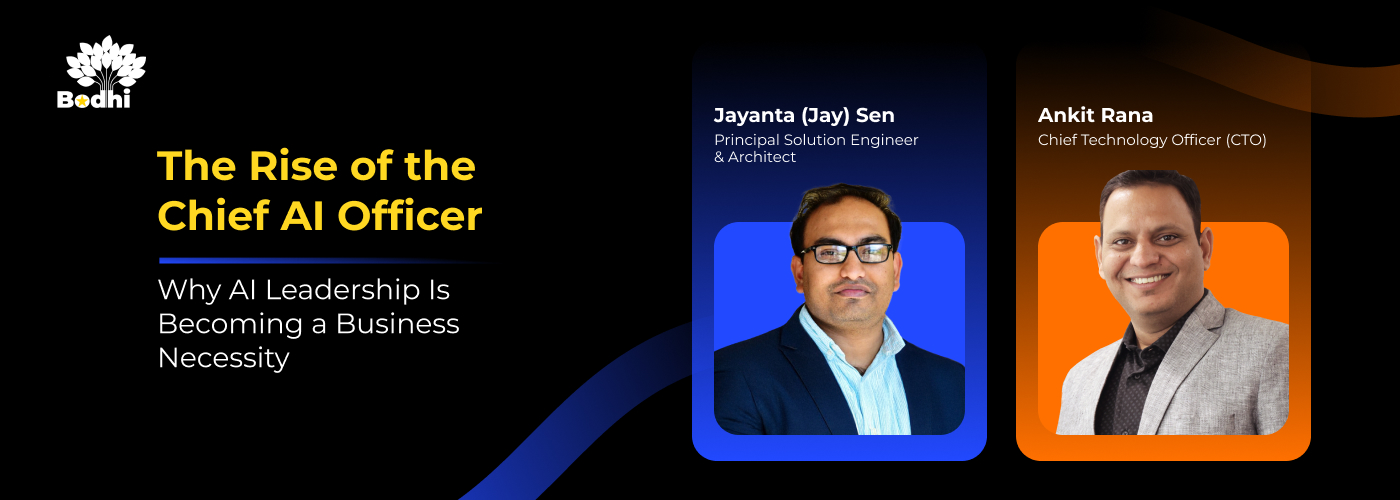
Registrera dig för att få de senaste insikterna och uppdateringarna inom teknik, AI och dataanalys, datavetenskap och innovationer från Polestar Analytics.
 Sammanfatta detta blogginlägg med:
TL;DR:Inte alla företag behöver en AI-chef, men alla företag behöver någon som äger AI. Den här artikeln förklarar varför rollen växer fram, vem som behöver den, vad jobbet egentligen innebär och tecknen på att det är dags att anställa en, baserat på ett samtal mellan Microsofts Jay Sen och Polestar Analytics Ankit Rana.
Om du har varit på LinkedIn på sistone har du sett titeln överallt: Chief AI Officer.
NASA anställer för det.Stora vårdföretaganställer för det. Styrelser frågar sina ledningsgrupper varför de inte har en ännu.
Så är detta ett verkligt skifte, eller lägger bara ytterligare ett titelföretag till för att alla andra har ett?
Fawzan Yusuf, chefen för den kommersiella verksamheten på Polestar Analytics satte sig ner medJay Sen, chefsteknikarkitekt för AI/ML och GenAI på Microsoft, ochAnkit Rana, teknisk chef och innovationschef på Polestar Analytics, för att diskutera det igenom.
Deras svar: det här handlar inte om en ny titel.Det handlar om att ge AI något som de flesta företag ännu inte har.Någon som ansvarar för det.
Ankit inledde med en snabb omgång frågor till Jay. Här är vad som kom ut av det:
AI är inte längre något som IT-avdelningen i tysthet experimenterar med i ett hörn. Nu påverkar det hur hela verksamheten drivs.
Det betyder att företag behöver någon som kan göra två saker samtidigt: förstå vad AI kan göra och förklara det på ett sätt som resten av verksamheten förstår.
Här är den verkliga anledningen till att företag anställer för den här rollen – inte för att AI har blivit smartare, utan för att den har blivit större. Det slutade vara ett teams problem i det ögonblick då varje team började använda det på olika sätt.
När marknadsföring, ekonomi, drift och produkt använder sina egna AI-verktyg utan att någon styr, är problemet inte verktygen. Det är att ingen har kontrollen.
Inte alla företag behöver en just nu. Det beror på hur mycket verksamheten redan är beroende av AI, hur komplex verksamheten är och hur mycket reglering branschen står inför.
Ungefär så här står det till:
Upptäck hur ledande organisationer prioriterar AI-investeringar, etablerar effektiv styrning och mäter ROI för att maximera affärseffekten år 2026.
Läs artikelnFolk antar att en AI-chef behöver skriva kod hela dagarna. Det stämmer inte.
Jobbet handlar mindre om tekniken och mer om att koppla den tekniken till affärsresultat.
Verktyg som Microsoft Copilot gör AI enklare att använda varje dag. Så den tekniska sidan blir mindre av ett hinder. Det är just därför detta måste vara en affärsmässig roll först och en teknisk i andra hand.
"Data som lagras i ett lager gör ingenting i sig självt. Det skapar bara värde när någon använder det för att fatta bättre beslut, snabbare."
AI är bra på utförande. Det ersätter inte omdöme. Så här skiljer sig de två åt:
| Vad AI hanterar | Där en CAIO träder in |
|---|---|
| Hittar snabbt mönster i stora mängder data | Kopplar dessa mönster till verkliga affärsmål och spårar avkastningen |
| Automatiserar repetitiva uppgifter | Hjälper team att förändra hur de arbetar dagligen |
| Snabbar upp testning och experiment | Hanterar risk, integritet och efterlevnad |
| Gör kraftfulla verktyg tillgängliga för icke-tekniska personer | Får avdelningar att tala samma språk om AI |
Fyra saker, främst:
Inte alla företag börjar från samma ställe. Vissa bygger AI-kapacitet från noll. Andra har redan fem olika verktyg igång utan någon samordning mellan dem. Tillvägagångssättet är olika för varje företag.
| Börjar på nytt | Att åtgärda befintligt kaos | |
|---|---|---|
| Utgångspunkt | Knappt någon AI på plats ännu | AI-verktyg utspridda över avdelningar |
| Första steget | Hitta affärsproblemen som är värda att lösa | Granska vad som redan körs och åtgärda säkerhetsbrister |
| Prioritet | Planera de första 30, 60 och 90 dagarna för snabba vinster | Samla verktyg i ett system |
| Mål | Bygg momentum med tidiga vinster | Minska risken och skala upp säkert |
Tidsplanerna skiljer sig också åt. Digitalt inbyggda företag rör sig snabbt. Traditionella företag bör planera i 12 till 14 månader innan de ser verkliga resultat.
Tre tecken på att det är dags att utse någon som ansvarar för AI:
Oavsett om du börjar med en ny eller nybyggd miljö, lär dig hur du identifierar värdefulla AI-användningsfall, prioriterar initiativ och skalar AI ansvarsfullt med ett strukturerat exekveringsramverk.
Ladda ner spelbokenSå är AI-chefen bara ytterligare en titel som rider på AI-vågen?
Inte riktigt. Titeln är valfri. Ansvaret är det inte.
I takt med att AI sprider sig över alla delar av ett företag måste någon äga den – strategin, risken, människorna och resultaten. Kalla den personen Chief AI Officer eller något annat. Jobbet måste existera oavsett.
Vill du se hela samtalet, ofiltrerat? Se hela sessionen här.
Inte nödvändigtvis. Stora företag som använder AI i flera affärsfunktioner gynnas mest av dedikerat AI-ledarskap. Mindre organisationer kan ofta tilldela AI-ägarskapet till en befintlig chef, förutsatt att någon är ansvarig för strategi, styrning, implementering och affärsresultat.
Det finns ingen enskild rapporteringsmodell. Rätt struktur beror på organisationens storlek och AI-mognad. Det som är viktigare än rapporteringslinjer är att säkerställa att AI-beslut är i linje med affärsprioriteringar snarare än att förbli isolerade inom IT.
Snarare än att lansera nya AI-projekt omedelbart är prioriteten att förstå befintliga initiativ, identifiera dubbelarbete, åtgärda luckor i styrningen och välja ut ett fåtal affärsproblem med stor inverkan där AI snabbt kan leverera mätbart värde.
Ja, men bara om någon tydligt äger AI-strategi, styrning, investeringsbeslut och implementering mellan avdelningar. Titeln är valfri; tydlig ansvarsskyldighet är inte.
Om författaren
Databerättaren
De bästa idéerna kommer inte. De väntar på att du ska vara redo.
Relaterad blogg
 Astha Chadha