SudhaVerslaafd aan data en business intelligence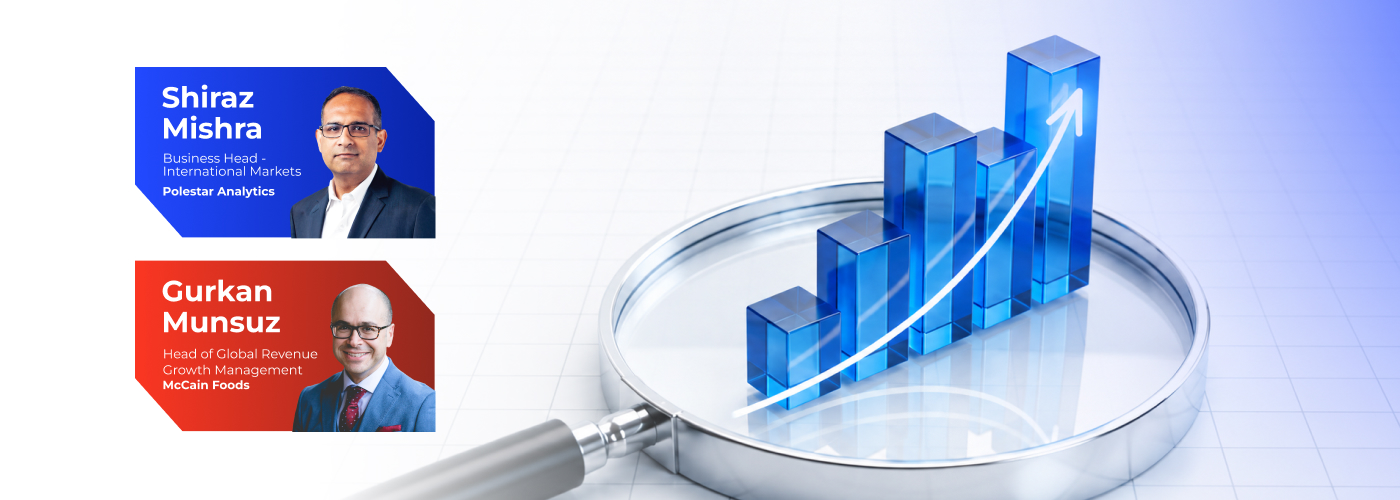
Meld u aan om de nieuwste inzichten en updates over technologie, AI & data-analyse, datawetenschap en innovaties van Polestar Analytics te ontvangen.
 Vat dit blogbericht samen met:
Gurkan Munsuz, hoofd Global Revenue Growth Management bij McCain Foods, in gesprek met Shiraz Mishra, hoofd International Markets bij Polestar Analytics. Dit is de meest recente in een reeks gesprekken.Polestar Analyticsloopt samen met commerciële leiders inConsumentengoederen en detailhandelover wat Revenue Growth Management nu eigenlijk succesvol maakt.
Vraag tien mensen in een bedrijf in consumentengoederen watOmzetgroeimanagementAls dat wel zo is, krijg je tien halve antwoorden. Iets met prijsstelling. Iets waar de financiële afdeling verantwoordelijk voor is, of misschien de verkoopafdeling.
RGM heeft een merkwaardige reputatie voor een discipline die, mits goed uitgevoerd, meer winst genereert dan het gehele reclamebudget, en dat geruisloos, als een goed geoliede motor. Maar zelden begrijpen mensen het op een eenvoudige manier.
Daarom gingen we met Gurkan om de tafel zitten om die kloof te overbruggen. We bespraken RGM vanuit zowel een technisch als een menselijk perspectief: hoe de discipline in de praktijk werkt en wat er nodig is om er een carrière en een team omheen op te bouwen.
Gurkan:In verschillende tijden,RGMis om verschillende redenen relevant geweest. Tijdens de inflatieperiode draaide het vooral om prijsvorming, omdat daar de druk lag. Maar nu moeten we de vraag organisch laten groeien door middel van volume. Dus in plaats van de "prijspolitie" of de "kortingspoortwachter" te zijn, verschuiven we naar de rol van "waardecreatieteam".
Deze aanpak vereist, zoals ik al zei in mijnvorige RGM-rondetafelHet stimuleren van volumepenetratie en het optimaliseren van de prijs- en verpakkingsstructuur om waarde te creëren voor zowel consumenten als klanten.
Het probleem is dat het voor een groot deel van de organisatie nog steeds een black box is. We proberen dat deels te vermenselijken, zodat mensen begrijpen wat er werkelijk achter die beslissingen schuilgaat, in plaats van alleen maar een black box te zien die cijfers uitspuugt. We zouden RGM nu moeten zien als een aanvallende middenvelder (nummer 10) in het voetbal, omdat de rol verschillende linies verbindt, kansen creëert en zowel technisch inzicht als creatieve visie vereist.
Gurkan:Een van de redenen waarom we uitdagingen zien in de FMCG-sector is dat we te veel op prijsstelling vertrouwden zonder echt te begrijpen wat de consument doormaakte. Nu leren we veel van andere delen van de wereld. In India, of in sommige andere financieel zwakke regio's wereldwijd, hebben we bijvoorbeeld geleerd dat het soms niet eens om prijselasticiteit gaat.
De consument gaat een bepaalde gelegenheid in met een vast budget. Onze rol verandert dus. Het gaat niet meer om "wat is de juiste prijs voor dit product", maar om "hoe ontwikkelen we een commerciële oplossing of maaltijd voor die gelegenheid die binnen dat budget past?". Dat is geen korting, maar inlevingsvermogen in hoe iemand zijn zuurverdiende geld besteedt. En we zien datzelfde principe van toepassing, of het nu gaat om een omgeving met hoge inflatie of om consumenten met een lager inkomen hier in de VS.
Uiteraard bestaan er frameworks zoals OBPPC, Triple Win, prijsladders, prijswatervallen, enzovoort, die we in onze systemen en werkwijzen gebruiken. Maar de behoeften en eisen van de klant vooropstellen is de beste aanpak.
Shiraz:Dit geldt ook voor onze RGM-oplossingen; frameworks zijn in de applicaties zelf ingebed. Bijvoorbeeld:Prijspulsis gebaseerd op de prijsladder, prijselasticiteitsmodellering, positioneringsmatrix, enz.PromoPulseBeschikt over een classificatie-engine (Schalen / Optimaliseren / Experimenteren / Stoppen) voor promoties.
Patroon zoals waargenomen in de echte wereld:Dit patroon is ook elders te zien. Hindustan Unilever liep in de jaren 80 in landelijk India tegen hetzelfde probleem aan, waar standaardflessen shampoo simpelweg niet aansloten bij de dagelijkse bestedingen van de dorpelingen. De oplossing was het inmiddels beroemde shampoozakje, geprijsd op ongeveer een roepie, dat volgens de Jong en Zatta begin jaren 2000 bijna 70 procent van de shampooverkoop in India vertegenwoordigde. Coca-Cola paste recenter een vergelijkbare strategie toe in Latijns-Amerika met een fles van 1,25 liter en een mini-blikje van 200 ml, afgestemd op de prijsklassen die huishoudens zich konden veroorloven. Coca-Cola FEMSA koppelt deze stap, volgens eigen gegevens, aan een jaarlijkse omzetstijging van 2 tot 4 procent in sommige markten, zelfs waar het totale volume gelijk bleef.
Gurkan:De rol van AI is om menselijk oordeel aan te vullen, niet om het te vervangen. Op het moment dat een aanbeveling uit een black box komt en iedereen die zomaar overneemt omdat "de machine het zegt", heb je een serieus probleem, want zo werkt vertrouwen niet. Wat we bouwen is een manier om onze effectiviteit met AI te verbeteren, maar het menselijke element, de emotionele intelligentie (EQ) en sociale vaardigheden (SQ), is wat daadwerkelijk vertrouwen opbouwt bij cross-functionele partners nadat je AI hebt ingezet om het werk te ondersteunen. Het is de reis van pure data, naar inzicht, naar verhaal, naar storytelling, die echt aanslaat bij mensen. Je gebruikt verschillende aspecten van EQ en SQ bij elke stap in dat proces.
Ik heb zelfs geprobeerd dit wiskundig uit te werken. AI op zich staat niet gelijk aan vertrouwen, dus de vergelijking komt meer in de buurt van AI plus EQ plus SQ plus al het andere, bovenop zelfgerichtheid, is gelijk aan vertrouwen.
Er bestaat een bekende versie hiervan, geheel buiten RGM om, namelijk de vertrouwensvergelijking uit het boek van Maister, Green en Galford.De vertrouwde adviseur, waarbij vertrouwen wordt omschreven als geloofwaardigheid plus betrouwbaarheid plus intimiteit, gedeeld door zelfgerichtheid.
Mijn kaart sluit er vrijwel direct op aan:
Je kunt beschikken over geweldige AI, oprechte empathie en een vlekkeloze presentatie, maar toch geen stap verder komen als de aanwezigen het gevoel hebben dat RGM zijn eigen belangen verdedigt in plaats van een gezamenlijk probleem op te lossen.
Shiraz:Dit is vergelijkbaar met het principe waarop Polestar Analytics zijn eigen werkwijze baseert.RGM-gereedschapwaarbij elasticiteits- en prijsmodellen worden gekoppeld aan verklaarbare AI-uitvoer, zodat commerciële teams de redenering achter een aanbeveling kunnen zien, en niet alleen het getal.
Gurkan:Dit is iets waar ik als teamleider veel waarde aan hecht. We moeten een concreet pad creëren waarin mensen zichzelf zien excelleren in een RGM-rol, en vervolgens begrijpen wat de volgende stappen zijn als ze die rol eenmaal vervullen. Welke vaardigheden moeten ze ontwikkelen? Wat moet er in hun ontwikkelingsplan staan? Dat is waar EQ en SQ weer om de hoek komen kijken, dit keer aan de kant van de mensen en HR, niet alleen aan de kant van het vertrouwen in beslissingen. Het ontwikkelen van die vaardigheden stelt iemand in staat om door te groeien naar verandermanagement en bredere invloed binnen de organisatie, en niet alleen om een prijsmodel goed uit te voeren.
Gurkan:Nieuwsgierigheid en een mentaliteit van continue verbetering. Om succesvol te zijn in de retailmarkt, of eigenlijk overal in de consumentengoederensector, moet je de juiste vragen blijven stellen, want de externe omgeving staat nooit stil. Consumenten veranderen. Retailers veranderen. De landen waarin we actief zijn, veranderen. Als je niet nieuwsgierig bent, blijf je werken met een verouderd beeld van een markt die al lang is veranderd.
Gurkan:We zijn allemaal mensen, we maken allemaal fouten, en eerlijk gezegd vormen die fouten ons tot wie we zijn. Ik denk terug aan twee dingen die een mentor me lang geleden vertelde. Ten eerste: helderheid is je superkracht. Ten tweede: wees geen purist. Dat tweede punt is belangrijker dan mensen denken, want het is makkelijk om te verzanden in data en te wachten tot de perfecte dataset zich aandient. Terwijl je wacht, mis je het moment om daadwerkelijk de oplossing te bieden.
Het humaniseren van RGM betekent niet dat de technische nauwkeurigheid achter prijsstelling en verpakkingsarchitectuur wordt weggelaten. Het betekent het bouwen van systemen en mensen die helder kunnen handelen, zelfs voordat de data perfect is, en die elkaar voldoende vertrouwen om dit samen te doen. Polestar Analytics werkt samen met CPG- en retailteams aan de prijsstelling, promoties en portfolio-ontwikkeling die aan gesprekken zoals deze ten grondslag liggen.
Over de auteur
Verslaafd aan data en business intelligence
Wanneer je theorieën ontwikkelt voordat je over data beschikt, begin je onbewust feiten te verdraaien om ze aan te passen aan je theorieën, in plaats van theorieën aan te passen aan de feiten.
Gerelateerde blog
 Astha Chadha