 KaifInzichtarchitect
Meld u aan om de nieuwste inzichten en updates over technologie, AI & data-analyse, datawetenschap en innovaties van Polestar Analytics te ontvangen.
 Vat dit blogbericht samen met:
Noot van de redactie:In 2026 draait FinOps niet langer alleen om de kosten van de cloud. Het omvat nu ook SaaS, licenties en uitgaven voor AI-agents. Deze blog legt uit waar het kostenbeheer van de FinOps-cloud misgaat binnen moderne data- en AI-platformen, en hoe een platformgerichte aanpak inzicht omzet in daadwerkelijke besparingen.
| Enterprise FinOps in 2026 moet beschikken over een AI-gestuurd kostenbeheersysteem, omdat een dashboard alleen de uitgaven weergeeft, maar de kosten niet optimaliseert. Met AI-agenten, inferentieaanroepen en datapijplijnen die onvoorspelbare kosten met zich meebrengen, heeft de onderneming een platform nodig dat de uitgaven tot op het niveau van de pijplijn, query, model en agent monitort en daarop automatisch actie onderneemt, met menselijke goedkeuring. |
Kort samengevat:
De uitgaven aan cloud, data en AI zijn uitgegroeid tot een van de grootste kostenposten binnen het bedrijfsbudget, maar...Flexera 2026Uit rapporten blijkt dat 76% van de grote bedrijven nu meer dan 5 miljoen dollar per maand aan de cloud uitgeeft, en dat 85% kostenbeheer als hun grootste zorg beschouwt.PwC blijkt dat 25% van die uitgaven verspild wordt. De oplossing is niet een nieuw dashboard. Het isAI-gebaseerde cloudkostenoptimalisatieingebouwd in het data- en AI-platform zelf, geleverd via een platform-plus-services-model dat consequent beter presteert dan benaderingen die alleen tools of alleen services aanbieden.
De eerste golf vanCloudkostenbeheerHet ging erom de factuur duidelijk te zien. Labels. Toewijzingen. Terugkoppeling. Anomalie-waarschuwingen. Tegen 2026 hebben de meeste bedrijven dit allemaal, en toch is het probleem alleen maar erger geworden.
PwC's 2026Onderzoek toont aan dat organisaties zich nu meer zorgen maken over uitgaven aan de cloud dan over beveiliging: 82% noemt dit als hun grootste zorg en 25% van de uitgaven is verspild. Stijgende investeringen in FinOps betekenen niet dat het probleem is opgelost. Het betekent juist dat de kosten, met name die van AI en dataworkloads, sneller stijgen dan de tools die zijn ontwikkeld om deze kosten te beheersen.
DeDe stand van zaken in FinOps in 2026vat het als volgt samen: “We zijn tegen de grote verspillingen aangelopen en staan nu voor een groot aantal kleinere kansen die meer inspanning vergen om te benutten.De makkelijke besparingen zijn verdwenen. Wat overblijft, is verspreid over duizenden kleine beslissingen in datapijplijnen, AI-inferentieaanroepen, query's en vergeten assets. Dat is de kloof die Polestar Analytics helpt dichten.
De 80/20-regel is perfect van toepassing op uitgaven voor de cloud.De focus van AWS Well-Architected op de financiële dienstverleningssectorHet wordt aanbevolen als een vuistregel voor goed bestuur: ongeveer 20% van de werklast en de assets zijn doorgaans verantwoordelijk voor 80% van zowel de kosten als de incidenten. Teams die een goede inventarisatiestap overslaan, optimaliseren vaak de verkeerde 80%.
Ankit Rana, Chief Technology Officer bij Polestar Analytics, verwoordt het treffend:
De kosten die in moderne dataomgevingen weglekken, komen niet voort uit de cloudkosten. Ze komen voort uit beslissingen stroomopwaarts, zoals dubbele pipelines, ongebruikte datasets, onderbroken dataherkomst en slecht afgestelde taken die traditionele FinOps-dashboards niet kunnen detecteren. Zolang FinOps niet binnen het dataplatform zelf integreert en begint met optimaliseren op asset- en queryniveau, bestrijden bedrijven de symptomen in plaats van de oorzaak.
De meest voorkomende fout is om FinOps te beschouwen als een financiële functie die aan een technisch probleem is gekoppeld. Facturen van cloud- en AI-leveranciers komen binnen, de financiële afdeling wijst het geld toe, de technische afdeling reageert. Deze cyclus herhaalt zich maandelijks. Het geldverlies is dagelijks.
Neem bijvoorbeeld een recent project met circa 14.000 pipelines, 68.000 tabellen en 17 TB aan actieve opslag, verdeeld over 17 bedrijfsdomeinen. De grootste besparingen werden niet gerealiseerd door het schalen van instanties. Ze zaten in de 20% van de assets die verantwoordelijk waren voor 80% van de kosten en incidenten: verouderde pipelinepatronen, ongebruikte tabellen die nog steeds overhead voor opslag en audits met zich meebrachten, en eenmalige query's die tegen de volledige productiekosten draaiden. Het vinden en oplossen hiervan vereist intelligentie die in het platform is ingebouwd, en niet een factureringsdashboard.
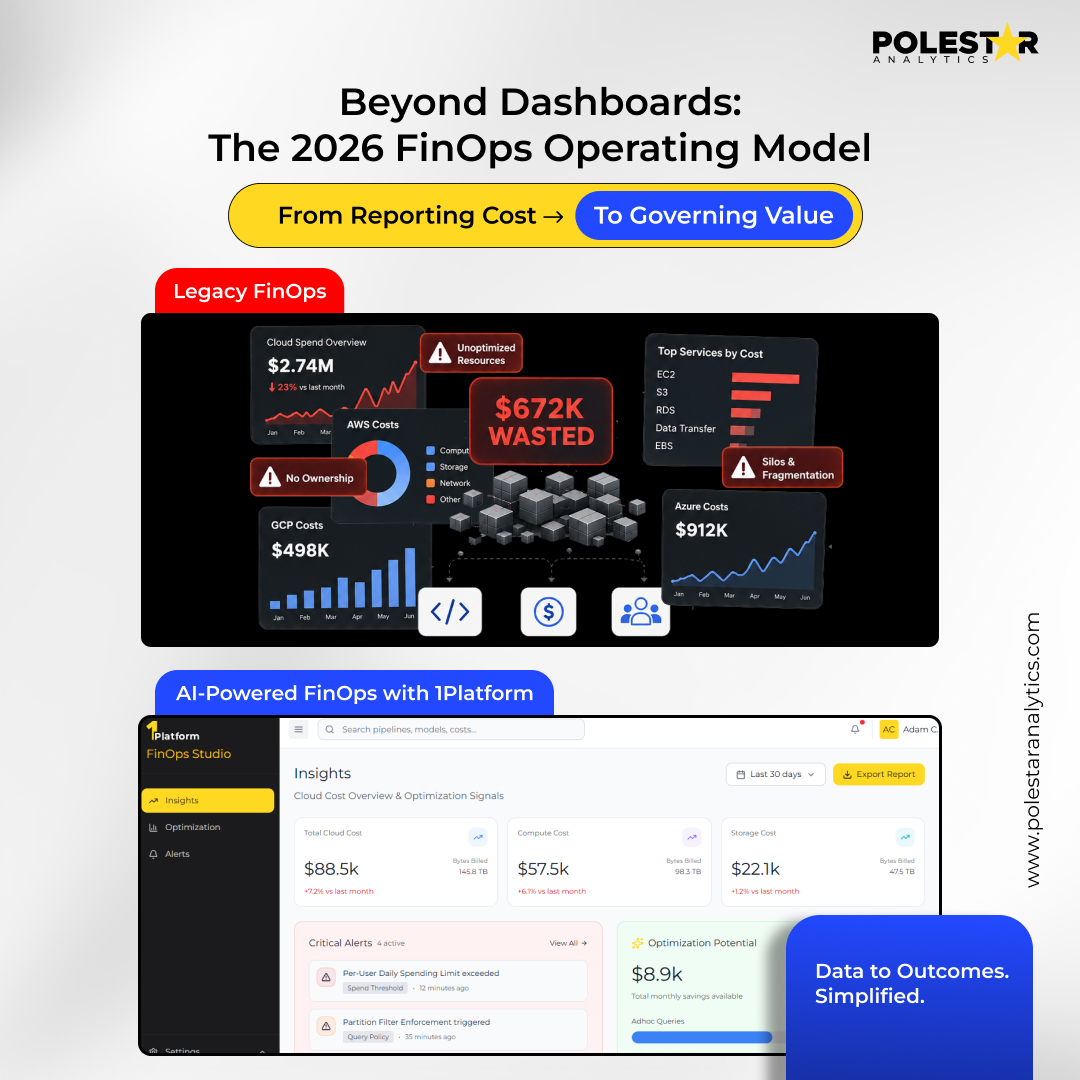
Binnen bedrijfsomgevingen die draaien op Databricks, ADF, Snowflake en multi-cloudarchitecturen, concentreren kostenlekken zich rond een paar structurele knelpunten. Dit zijn de plekken waar elkeKostenoptimalisatie van dataplatformenHet programma wint of faalt in stilte.
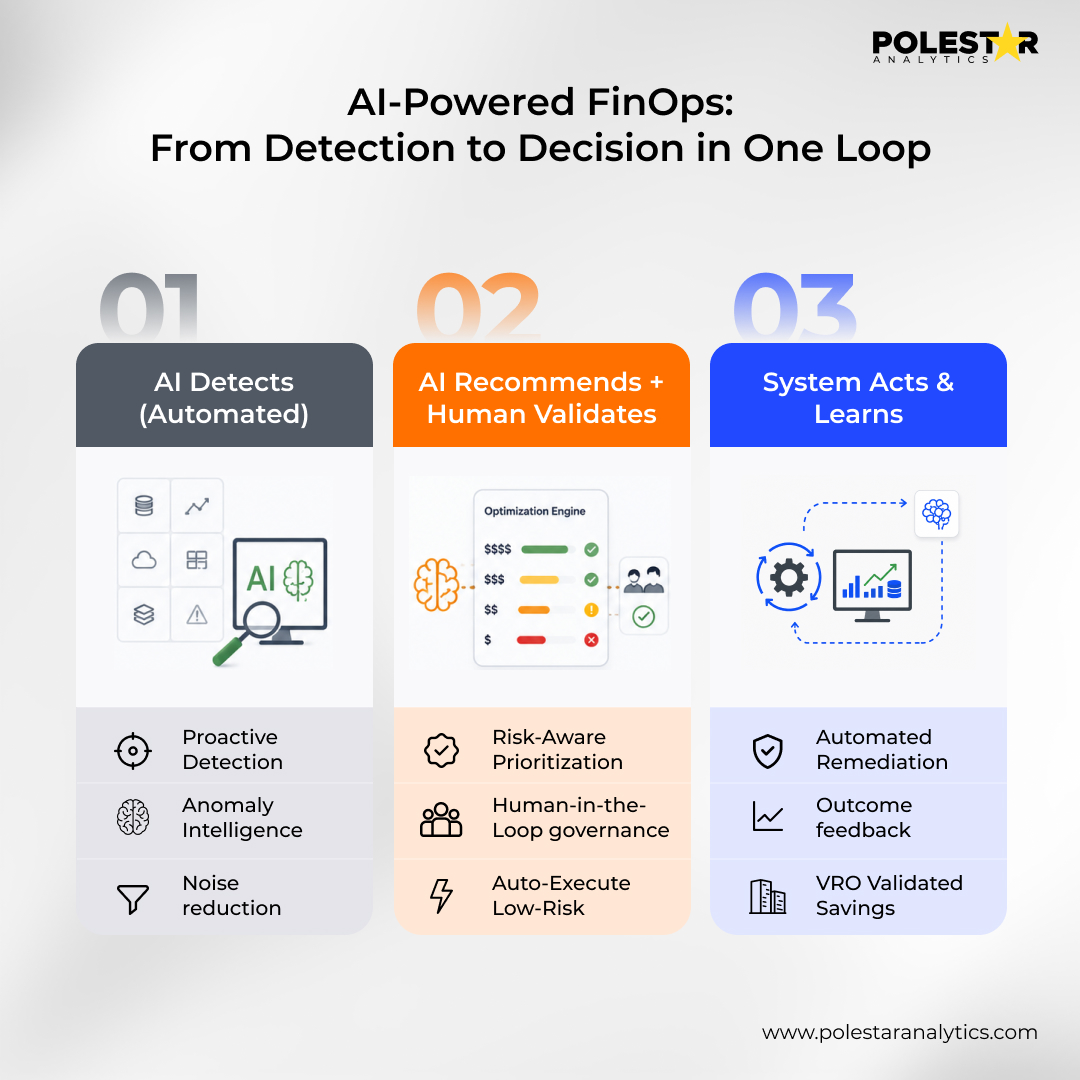
Enterprise FinOps kan het beste worden benaderd als een continue operationele cyclus, niet als een project.
Fase 1:Ontdek en stel een basislijn vast. Maak een volledige inventarisatie van pipelines, taken, tabellen, clusters, AI-workloads en verbruikspatronen. Een grondige inventarisatie duurt doorgaans 4 tot 6 weken en helpt bij het identificeren van de 20% van de assets die verantwoordelijk zijn voor 80% van de uitgaven. Dit is met name relevant omdatFlexera's State of the Cloud Report 2026Naar schatting wordt 29% van de uitgaven aan IaaS en PaaS verspild, de eerste stijging in vijf jaar, veroorzaakt door de toenemende complexiteit van AI-workloads.
Fase 2:Implementeer het Observability Fabric. Verzamel telemetriegegevens van elke laag: data-invoer, transformatie, verwerking en AI-inferentie. Signalen over status, gebruik, datakwaliteit en kosten stromen samen in één dashboard. Zo werkt het1PlatformGeconvergeerde architectuur brengt kosteninzicht op activaniveau. Volgens deDe stand van zaken in FinOps in 2026Momenteel rapporteert 78% van de FinOps-teams aan de CTO of CIO, een stijging van 18 procentpunten sinds 2023. Kosteninformatie moet daarom de engineer bereiken die de beslissing neemt.
Fase 3:Optimaliseren en automatiseren. AI-modellen suggereren de juiste dimensionering, planning, caching, retentie en consolidatie van AI-workloads. Zelfherstellende handlers proberen kleine fouten automatisch opnieuw op te lossen en geven alleen de complexere gevallen door aan engineers. Het is simpel rekenwerk. Het State of FinOps 2026-rapport laat zien dat zelfs bij de hoogste clouduitgaven, van $ 100 miljoen en meer, een gemiddeld FinOps-team slechts uit 8 tot 10 mensen bestaat. Het is voor zo'n klein team praktisch onmogelijk om tienduizenden pipelines en AI-workloads handmatig te optimaliseren.
Fase 4:Continue Verbetering en Waarderealisatie. Elk kwartaal wordt de score bijgewerkt, de besparingen bevestigd en de regels geactualiseerd. Een gezamenlijk Waarderealisatiebureau keurt de basislijnen goed, boekt de besparingen en voorkomt de meest voorkomende valkuil: het ongemerkt verdwijnen van besparingen binnen 12 tot 18 maanden.FinOps Foundation 2026Uit data blijkt dat teams met steun van vicepresidenten of directieleden 53% kans hebben om de keuze voor clouddiensten te beïnvloeden, tegenover slechts 12% voor teams die op directieniveau blijven steken. Het Value Realization Office zorgt ervoor dat die steun behouden blijft.
De markt is verzadigd met losse tools. Het State of FinOps 2026-rapport maakt echter duidelijk dat het toepassingsgebied zich nu uitstrekt over AI (98%), SaaS (90%), licenties (64%), private cloud (57%) en datacenters (48%), een spreiding die geen enkel dashboard kan dekken. Duurzame resultaten vereisen dat drie dingen samenwerken:
McKinseyRapporten geven aan dat bedrijven met een goed gedefinieerde FinOps-aanpak 20-30% op cloudkosten kunnen besparen.Deloitteis nog een stap verder gegaan door te stellen dat bedrijven met geavanceerde FinOps tot wel 40% kunnen besparen, en schat de potentiële besparingen voor bedrijven alleen al in 2025 op $21 miljard.
Voor data-intensieve omgevingen op Databricks en Azure werkt dit alleen met een diepe integratie inUnity-catalogus, Purview, Lakeflow en pijplijnorkestratie. Polestar Analytics'Databricks-techniekDe praktijk is daar precies voor bedoeld.
Twee jaar geleden beheerde 31% van de organisaties hun AI-uitgaven binnen hun FinOps-praktijk. Vandaag de dag is dat 98%. Naarmate AI-agents en inferentieworkloads steeds meer terrein winnen, veranderen de kostendynamiek opnieuw: tokengebaseerde prijsstelling, volatiel GPU-gebruik en 'zombie'-AI-workloads. Dit wordt diepgaand onderzocht in de analyse van...FinOps in de GCC'sen het AI-native kostenmodel.
Datamanagementstrategie en FinOps zijn niet langer gescheiden. Een moderne data-engineeringpraktijk die inefficiënte pipelines uitfaseert en de uitgaven aan AI en agents beheert, is in feite een FinOps-programma. Een FinOps-programma dat geen rekening houdt met datakwaliteit, pipeline-ontwerp en kosten op agentniveau, is slechts rapportage.
BijPolestar AnalyticsWij helpen bedrijven bij het ontwikkelen en implementeren van FinOps-programma's om de kosten van cloud, data en AI om te zetten in tastbare kostenbesparingen, in plaats van slechts extra dashboards. Bij een Databricks-, Azure- of multi-cloud dataomgeving waar de kosten sneller stijgen dan het inzicht, is een afgebakende basislijn de logische volgende stap. Neem contact op met ons FinOps-team om een inventarisatie van 4 tot 6 weken in te plannen. Deze inventarisatie brengt de 20% van de assets in kaart die verantwoordelijk zijn voor 80% van uw kosten, gevolgd door een helder besparingsplan dat is afgestemd op uw huidige platform en governance-stack.
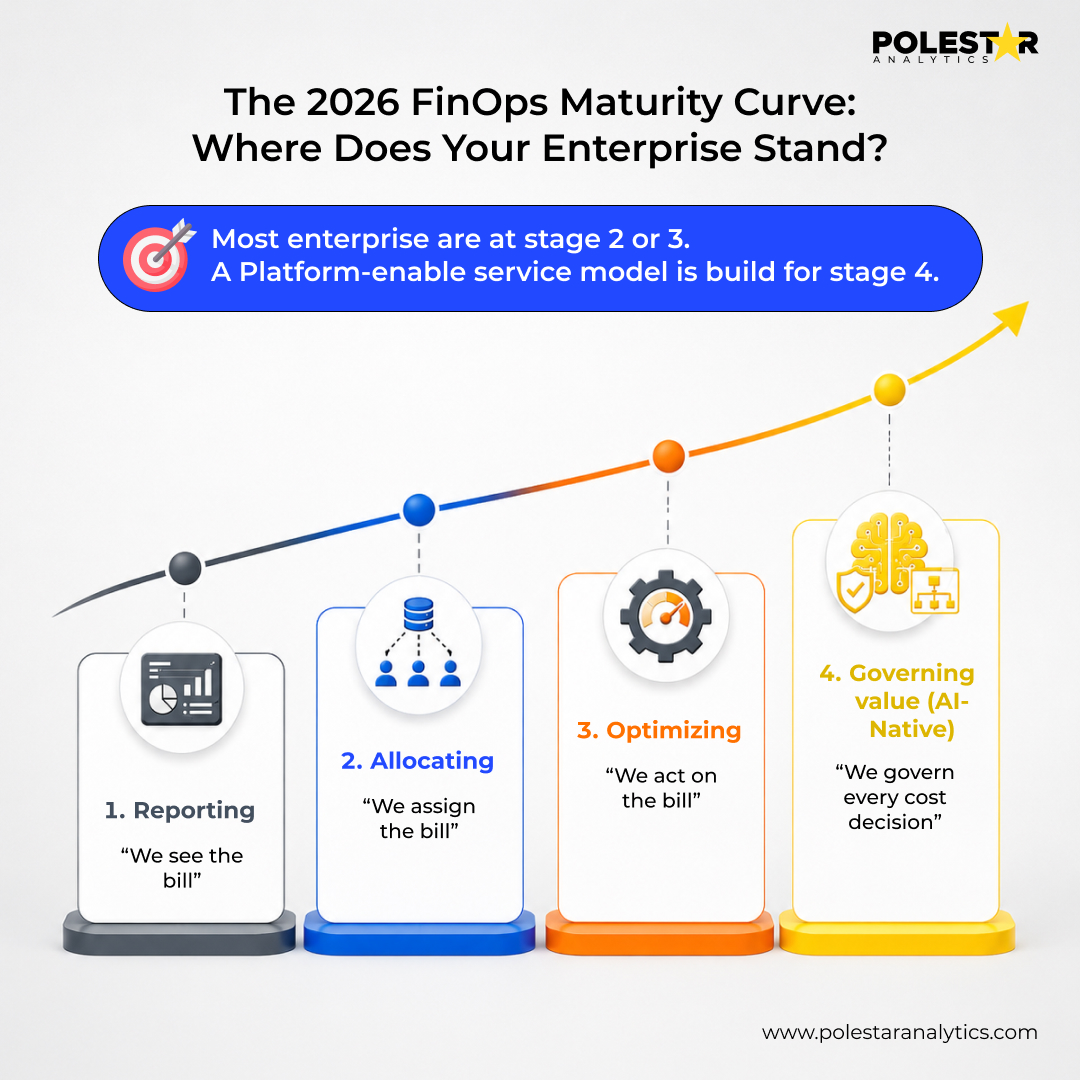
Het traditionele model laat ons zien waaraan en wat er is uitgegeven. FinOps cloudkostenbeheer verklaart waarom de uitgaven zijn gedaan en wie ervoor verantwoordelijk is. Het helpt ook bepalen of de uitgaven waarde hebben gecreëerd en wat er moet veranderen. Volgens McKinsey kan efficiënt FinOps de cloudkosten met 20 tot 30 procent verlagen.
AI- en agentworkloads ondermijnen de conventionele aannames van FinOps met betrekking tot cloudkostenbeheer, zoals de prijs (die niet per uur maar op basis van tokens of GPU-uren is), verbruik (niet-lineair en afhankelijk van gebruikers-/agentgedrag) en voorspellingen (per definitie moeilijker). Het FinOps Foundation-framework voor 2026 identificeert kostenraming van de architectuur vóór de implementatie en gedetailleerde monitoring van AI-kosten als de belangrijkste onvervulde behoeften. Bedrijven moeten de kosten per gebruiksscenario monitoren, 'zombie'-AI-workloads opsporen en kosten doorberekenen op het niveau van inferentieaanroepen.
Cloudkostenoptimalisatie op instantieniveau pakt gemakkelijk te behalen verbeteringen aan die volwassen bedrijven al hebben doorgevoerd. Wat overblijft, zoals ongebruikte tabellen, dubbele pipelines, inefficiënte transformaties, slecht afgestemde query's en ongecontroleerde AI-workloads, bevindt zich in de data- en AI-laag. Om die besparingen te realiseren is platformspecifieke instrumentatie nodig, geen factuuranalyse.
Over de auteur
Inzichtarchitect
Er zijn geen onzekerheden, alleen mogelijkheden en waarschijnlijkheden die door data tot bewijsmateriaal zijn gevormd.
Gerelateerde blog
 Astha Chadha