


 Kshitij GuptaData Strategist
Sign up to receive latest insights & updates in technology, AI & data analytics, data science, & innovations from Polestar Analytics.
 Summarize this blog post with:
| Databricks Genie is 4 products (Genie Code, Agents, One and Ontology) that turn governed Databricks data into trusted, plain-language answers. |
TL;DR
Only 7% of enterprises say their data is completely ready for AI. In October 2026, Polestar Analytics hosted two webinars with Databricks: a technical session on the Genie product family and a business session on Genie One. The technical session built a retail data estate live with all four Genie products. The business session showed Genie One answering a CPG analyst and a pharma sales manager from a single email. The lesson: context decides accuracy. In Databricks' internal evaluation, Genie with Ontology got 84.5% of questions right, against 52.4% for the best general coding agent tested.
Ask an AI tool "what was revenue last quarter?" and it has to make 4 decisions your tables never wrote down. Gross or net? Calendar or fiscal quarter? Which of the 3 order tables? Are cancelled orders in? Most tools guess. Confidently.
Polestar Analytics hosted both sessions with Databricks in October 2026.
| Webinar | Date | Speakers | What it covered |
|---|---|---|---|
| Understanding the Databricks Genie Landscape (technical) | October 22 | Vishal Vibhandik (Databricks), Bablu Chakraborty and Ankush Mehrotra (Polestar Analytics) | A live build on Azure Databricks using Genie Code, Agents, One and Ontology, governed through Unity Catalog |
| Genie One: Moving from Dashboards to Decision Agents (business) | October 29 | Amit Singh (Databricks), Siddharth Poddar and Lakshya Sredharan (Polestar Analytics) | What changes in a business user's day, with CPG and pharma demos and a framework for getting started |
The data foundation is usually the bottleneck. A Cloudera and Harvard Business Review Analytic Services report found only 7% of enterprises say their data is completely ready for AI. In CPG alone, McKinsey's October 2026 research found only 12 of 41 CPG companies surveyed had embedded AI into core workflows or scaled it.
As Amit Singh from Databricks put it, "revenue per active customer in Q3" can send an agent to dozens of revenue tables. Without context, it gets lost.
Read about why modernizing your data estate has to come first.
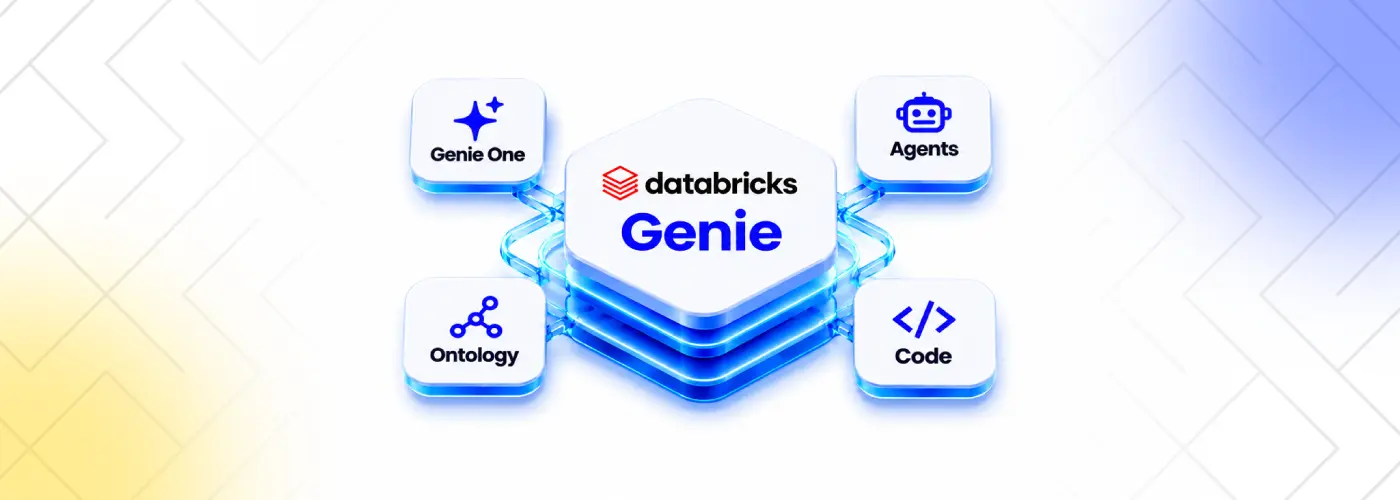
Migrate and Modernize Your Data EstateDatabricks Genie is a family of 4 products that share one governed context in Unity Catalog. Each covers a different job:
| Product | What it does | Who uses it |
|---|---|---|
| Genie Code | Writes, runs and fixes data work, from Lakeflow pipelines to AI/BI dashboards | Data engineers and analysts |
| Genie Agents | Governed plain-language Q&A over curated data | Analytics teams building for a business domain |
| Genie One | One chat across every agent a user can access, on the web, desktop and Microsoft Teams | Business users and leaders |
| Genie Ontology | The business map of your data, from set definitions and learned usage (public preview) | Everyone, behind the scenes |
Live on Azure Databricks, Ankush Mehrotra asked Genie Code for a documented gold-layer star schema across 6 retail data domains.
It wrote the Lakeflow pipeline, and the first dry run broke. Genie read the error, patched it and ran again, sticking to the team's naming rules and Ankush's own permissions throughout.
Would you ship that straight to production? The panel said no in the Q&A, and we agree. A person should still review what Genie writes.
Analytics teams curate each Genie Agent with instructions, trusted example queries and join hints. Chat mode handles questions with one right query, like revenue by region. A "why did this drop?" question goes to agent mode, which works through it in steps.
Every answer shows its SQL, and agents get benchmarked before they're certified.
Business users never see that layer. They ask Genie One, and it picks the right agent. In the demo, Ankush asked from Microsoft Teams and got the governed answer without opening Databricks.
Short answer: Genie sees only what you can see. In the technical session, Bablu Chakraborty and Ankush asked the same customer question and got 2 different numbers, because a row-level filter in Unity Catalog gave each a different slice of data.
That filter lives in Unity Catalog, and Genie simply respects it. There's no second set of permissions to maintain.
See what separates a clean migration from a stalled one.
Explore Unity Catalog Best PracticesSiddharth Poddar opened the business session with 5 frictions most roles hit, from finding data to redoing the same work next week. Lakshya Sredharan then demoed 2 personas on sample data.
CPG revenue growth. A commercial lead emailed one ask: hold margin without losing volume. Lakshya dropped the email into Teams. Genie One broke it into 3 questions, pulled pricing and promotion data together, and saved an Outlook draft flagging 88 products for a price increase and 473 loss-making promotions.
Pharma field sales. A sales manager asked which priority doctors were slipping, by territory. She didn't name a system. Genie One worked out it was an HCP engagement question and came back with 174 doctors at risk.
One small ontology rule made that work: a doctor can belong to several hospitals and territories at once. Without it, Genie would double-count doctors or give them to the wrong rep.
Read how autonomous revenue managers are built on Databricks.
Explore Unity Catalog Best PracticesStart narrow. Siddharth's 4-step framework from the business webinar is the one we'd follow:
Prep the data estate too. The technical demo began by documenting tables, keys and descriptions in Unity Catalog, the context Genie reads first.
To make step 3 easier, we launched the $0 Genie Kick Start with Databricks. Polestar Analytics spends 4 weeks implementing Genie on your own data, then your team gets 4 weeks to evaluate it: 60 days to proof of value, at no cost to start.
Missed the sessions? Watch Understanding the Databricks Genie Landscape for the technical build, and Genie One: Moving from Dashboards to Decision Agents for the business view.
Code quality depends on the context, coding standards and review process you give Genie, not on the model alone. Turning your standards into Genie instructions and benchmarking the output helps most. It isn't always cheaper, since retries use tokens, but it does help teams build faster.
Genie Code follows your instructions, so wrong logic in the prompt produces wrong code. The same prompt can also return different code on different runs. That's why generated code needs human review before production, and why a few paid iterations are normal.
No. You can import existing metric definitions, semantics and business rules from Power BI, Tableau and other BI tools. Dashboards still answer the questions you planned for, while Genie One handles the follow-up questions they can't.
About Author
Data Strategist
Most data answers questions. The right data changes direction.
Related Blog
 Kaif
 Aishwarya Saran