


 Mohana BhrugubandaIndustry Head, Financial Services and Tech

Sign up to receive latest insights & updates in technology, AI & data analytics, data science, & innovations from Polestar Analytics.
 Summarize this blog post with:
I walked into RIA Edge Austin's Tech for Growth Summit with one question: is the wealth industry ready to turn AI from a talking point into a growth engine? Three days later, my answer is "almost", and the gap is not the models. It is the data underneath them.
RIA Edge brings together founders, CEOs and operators from some of the fastest-growing registered investment advisors in the country. This year it ran November 9 to 11, with RIA Edge Private Markets alongside it. Nearly every conversation circled back to three forces: AI, scale and access to new asset classes.
What struck me was how connected those three forces are. Each one only works if a firm can trust its data.
AI was on nearly every agenda slot, yet the most useful moments came when speakers got honest about data. The message I heard again and again: AI is only as good as the data behind it.
Most RIAs I spoke with run on a patchwork. Custodian feeds sit in one place, the CRM in another, and operational data lives in spreadsheets, portals and inboxes. Each system tells part of the client story, and none tells all of it. Put an AI model on top of that and you get confident answers built on half the picture.
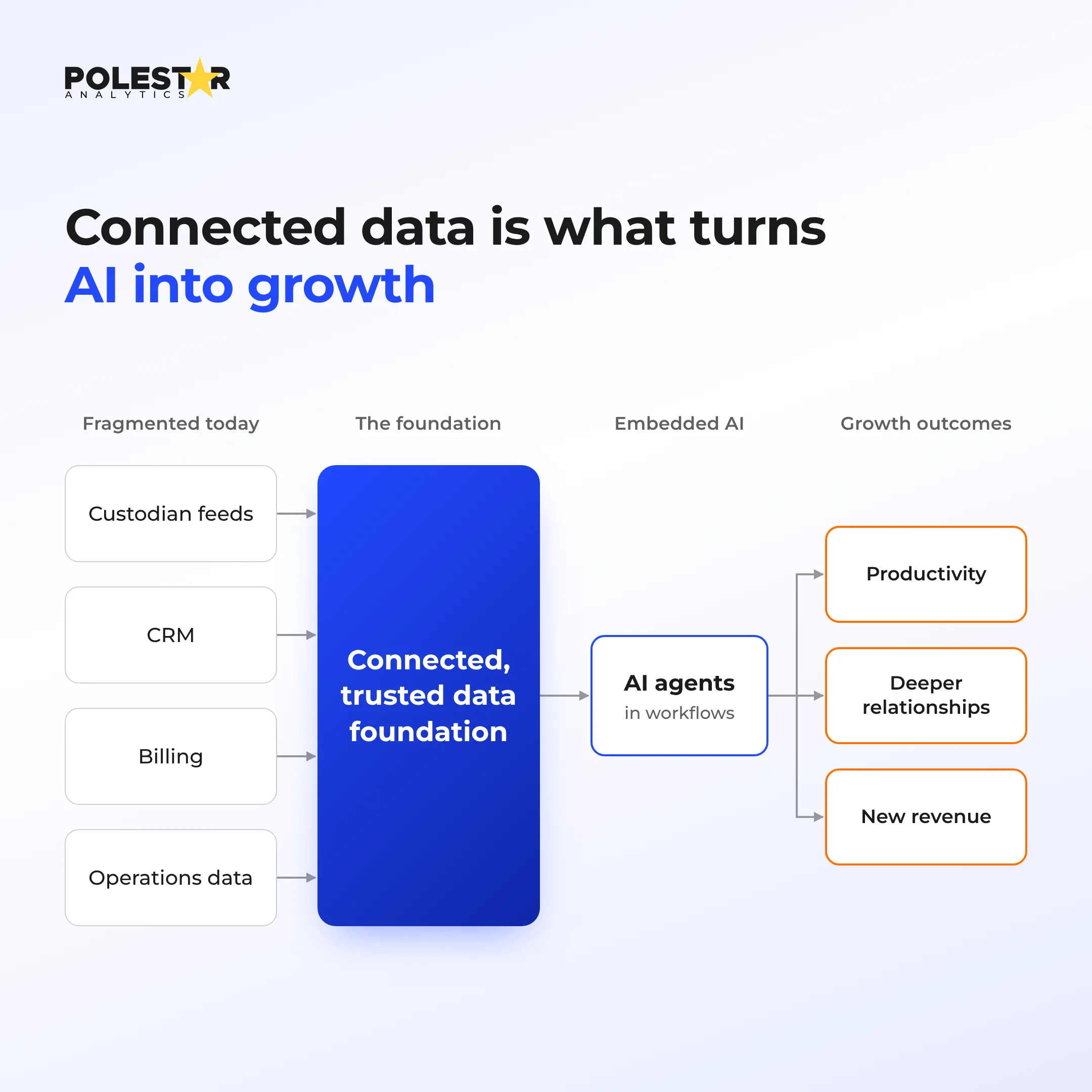
Karl Simon, co-founder and CTO of Subatomic AI, put it plainly on the agentic AI panel: "I do think clean data is the foundation to successful AI." His nuance mattered, though. He argued the cleanup can run in parallel with building use cases, and that AI itself can help assess and clean a firm's data. Moderator James Cantwell of RIA Ascent added that data does not need to be perfect to start, as long as firms tell their agents which sources to trust and when to escalate a decision to a human.
I agree with both points. Waiting for pristine data is a way to never start. But starting without a plan to connect and govern your data is a way to never scale.
The conversation has moved past chatbots and meeting notes. The summit framed the next step as AI embedded directly in advisor workflows, working alongside staff rather than sitting in a separate window.
The panel that captured this best urged firms to treat AI agents like new hires. Give each agent a job description, a probation period and regular status reviews, and widen its role only as it proves itself. Alison Dooher, head of AI for Schwab Advisor Services, recommended starting with a single, clearly defined activity so governance and monitoring can be built around it. Trevor Hicks of Stack Strategy compared agents to interns who should not get the keys to the castle on day one.
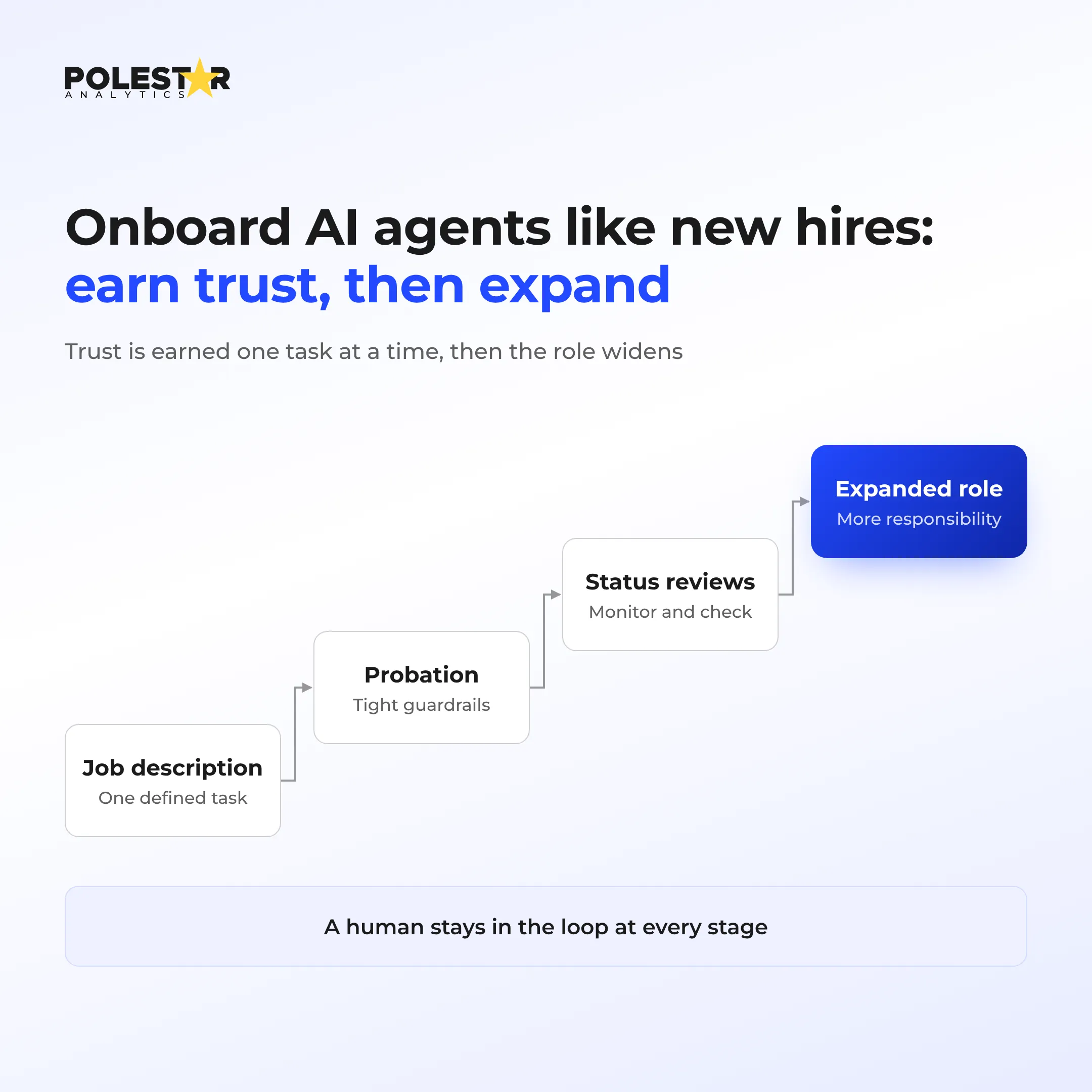
This framing resonated with me because onboarding a new hire is, at heart, a data exercise. You give them access to the right systems, the right client records and the right rules. An agent needs the same thing, only more precisely. The use cases on the table were practical ones:
Every one of these depends on an agent that can see a connected, trusted view of the client.
The private markets sessions showed where much of the industry's growth ambition is headed. The tone has shifted from "democratization" hype to the harder work of operations, education and liquidity.
Mercer Advisors, with $114 billion in client assets, offered a useful case. David Krakauer, its vice president of portfolio management, explained how the firm built in-house fund-of-funds for clients around the $10 million mark, consolidating diversification into one vehicle and one K-1. His lesson on product design stuck with me: going up market, he said, "doesn't mean it needs to be more complex." An earlier, more intricate fund had proven too hard for advisors to explain to clients.
Others pushed further. Mitchell Stein of ARENA Private Wealth described deploying $300 million directly into private company cap tables over the past year. In his words, the firm "wanted to create the dish, not just order off the menu."
From a data perspective, this is where things get interesting. Private assets bring capital calls, irregular valuations, K-1s, liquidity windows and fragmented reporting from many managers. If a firm's public-market data is already scattered, adding private markets multiplies the problem. The firms that win here will be the ones that bring alternatives data into the same trusted foundation as everything else.
One of the most human sessions came from Daryl Seaton, CEO of Sowell Management, a $7 billion firm working with 50 advisor partner firms. Seaton spoke candidly about succeeding founder Bill Sowell and balancing an entrepreneur's gut instinct with the growth and profitability that capital partners expect.
He described Sowell's model as giving advisors the technology platform, back-office operations and turnkey asset management, while leaving the relationship with them. "There's only one thing we don't do, and that's the client," he said.
That line captures something important. As RIAs grow through partnerships, minority investors and new divisions, leadership needs a single, reliable view of the business: across advisors, platforms and client segments. Gut instinct got many founders here. Trusted, connected data is what lets the next generation of leaders prove to partners that growth and profitability are both on track.
Austin convinced me that the firms that win with AI will start from one trusted view of the client. That is exactly the job we built WealthPulse to do at Polestar Analytics.
WealthPulse connects custodian, billing, CRM and market data into a single canonical model, with pre-built connectors to Pershing, Fidelity, Schwab, BNY Mellon and Apex. Data rolls up from account to household to advisor to firm, so the household becomes the golden record every advisor and agent works from.
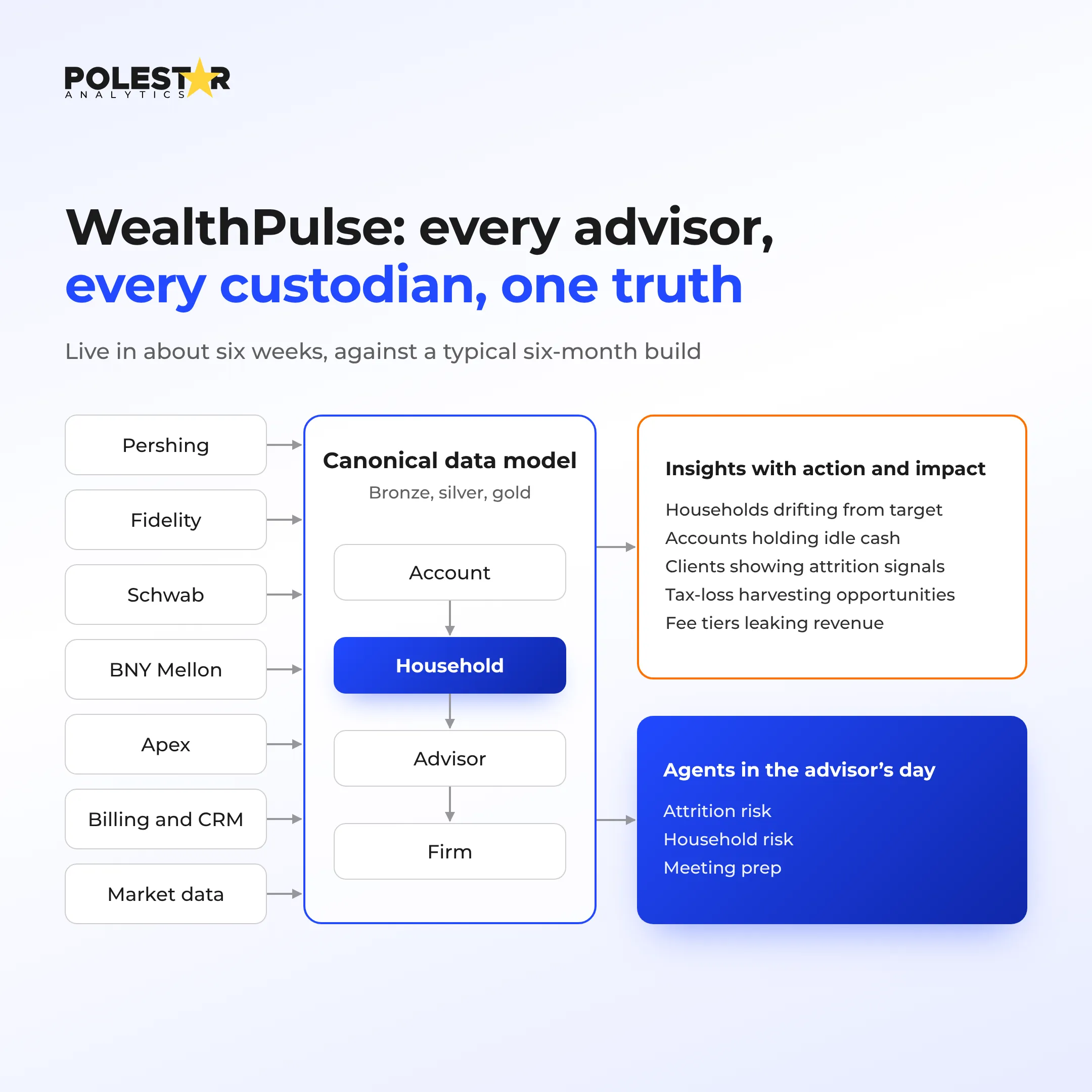
On that foundation, WealthPulse does not just chart, it tells. It names which households are drifting from target, which accounts hold idle cash, which clients show attrition signals, where tax-loss harvesting opportunities sit and which fee tiers are leaking revenue. Every insight carries a recommended action and its financial impact, and agents for attrition risk, household risk and meeting prep bring it straight into the advisor's day.
It also settles the "clean data first" debate from the panel. Firms see which KPIs their connected sources already unlock and which need one more source, so data work and AI value grow together. The result is a unified view running in about six weeks, against the six-month build most firms face before they see a single number.
The real opportunity isn't just adopting AI. It's getting the data foundation right and turning AI into measurable business growth.
Across every theme in Austin, the pattern held. AI agents need a trusted view of the client to do real work. Private markets need alternatives data brought into the same system as everything else. Growing firms need one version of the truth to lead with confidence. Underneath all three is the same job: bringing custodian, CRM and operational data together into a clean, connected and governed foundation.
For firms planning their next step, I would start with three questions:
I left Austin with a full notebook and a lot of conviction. If you were there too, or are wrestling with these questions at your firm, I would love to compare notes.
About Author
Industry Head, Financial Services and Tech
Waiting for pristine data is a way to never start. But starting without a plan to connect and govern your data is a way to never scale.
Related Blog
 Kaif
 Astha Chadha